
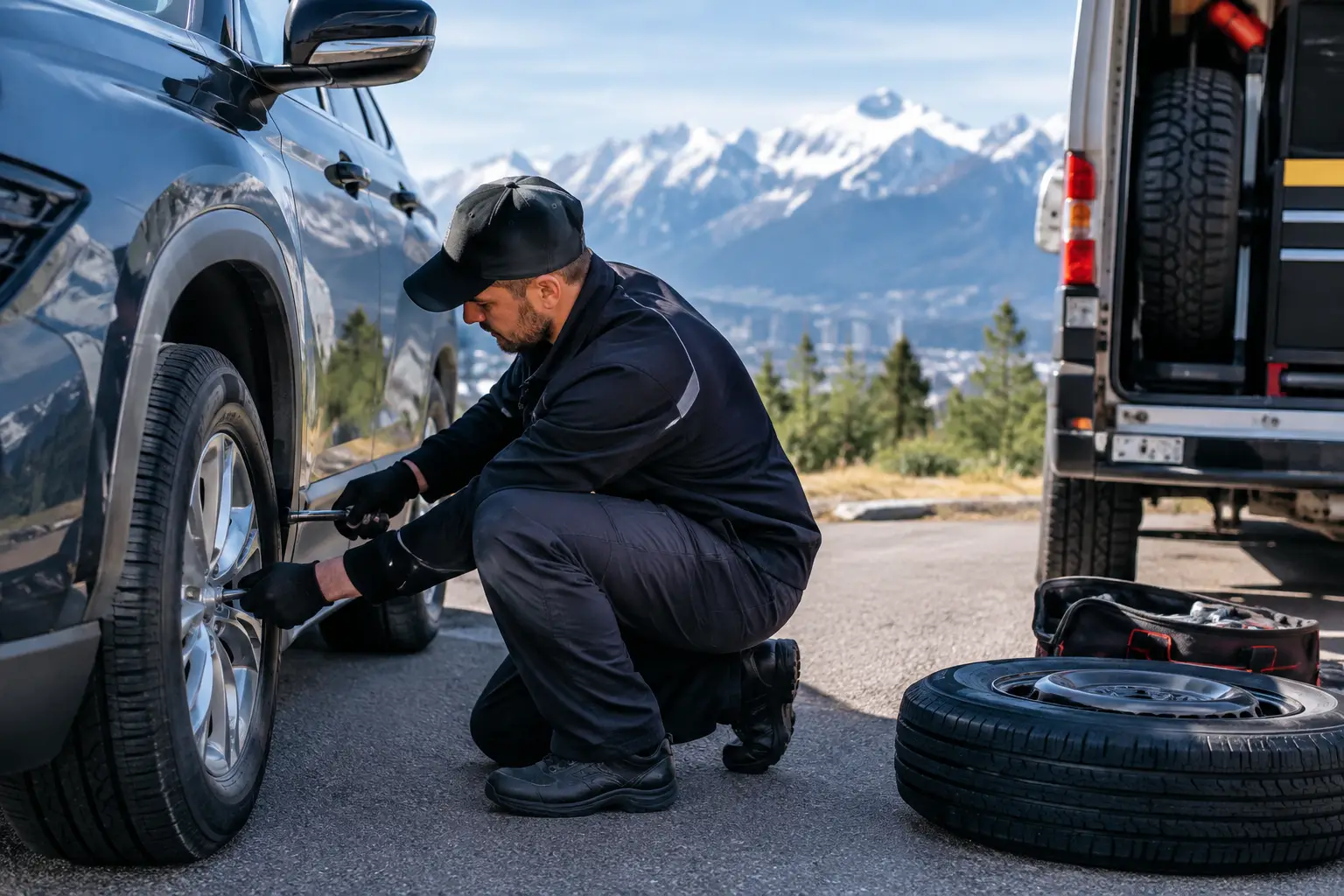
A flat tire in an office parking lot can turn a simple workday into a two-hour detour. A seasonal tire change can mean rearranging school pickup, commuting across Denver, and waiting in a crowded service lobby. That is where an on site tire service comparison becomes practical: the question is not only where tire work happens, but how much time, transportation, and uncertainty each option adds to the job.
A traditional tire shop remains a sensible choice in certain situations, especially for major mechanical repairs or highly specialized work. But for many everyday tire needs, mobile service offers a different model: professional equipment and trained technicians brought to your driveway, workplace, fleet yard, or parking lot.
On Site Tire Service Comparison: Mobile Service vs. Tire Shops
The biggest difference is simple. With a tire shop, you drive your vehicle to the service bay, check in, wait for the work, and drive away when it is finished. With mobile service, the technician arrives where the vehicle is already parked and completes eligible tire work there.
That difference affects more than convenience. It can determine whether a tire issue costs you an afternoon, whether a disabled vehicle needs towing, and whether a business vehicle misses a delivery route.
Time and scheduling
A shop appointment usually includes travel time, check-in, a wait in line, service time, and the trip home or back to work. Even when the tire work itself takes less than an hour, the total interruption can be much longer. If the vehicle cannot be safely driven because of a flat or damaged tire, the logistics become more complicated.
Mobile tire service shifts that downtime away from your schedule. You can continue working while a technician changes seasonal tires in your office lot, have new tires installed at home, or arrange a repair while the vehicle is parked. Same-day availability can be particularly valuable when a slow leak becomes a flat before an important commute.
Mobile service is not automatically faster in every circumstance. A busy day, a remote location, severe weather, or the need to source a specific tire can affect response time. The advantage is that you avoid the separate trip and waiting-room portion of the process.
Cost: compare the full cost, not just the invoice
Some drivers assume a mobile appointment must cost more because the technician travels to them. Depending on the service, that can be true. A mobile provider has vehicle, equipment, travel, and scheduling costs that a fixed-location shop may not structure in the same way.
But the service price is only one part of the comparison. Consider the cost of leaving work, using a rideshare, arranging another driver, paying for a tow, or losing use of a commercial vehicle. For a family with a full calendar or a fleet with vehicles that earn revenue on the road, reduced downtime can be worth far more than a modest service-call difference.
Ask for a clear quote that separates tire pricing, installation, balancing, disposal, repair materials, and any mobile service fee. Transparent pricing makes it easier to compare options fairly. Financing can also make an unexpected set of tires more manageable when replacement cannot wait.
Equipment and quality of work
A quality mobile tire provider should not be confused with a technician changing a spare using basic roadside tools. Professional mobile service rigs are built to perform real tire-shop work in the field. That can include hydraulic jacks, tire mounting and balancing equipment, portable air compressors, precision torque wrenches, tread-depth gauges, tire repair tools, and TPMS equipment.
Those tools matter because tire service is safety work. Wheels need to be mounted correctly, balanced accurately, inflated to the manufacturer’s specification, and torqued to the proper setting. A technician should also inspect the tire condition, valve stems, tread depth, wheel condition, and visible signs of uneven wear that may point to another issue.
A conventional shop may have an advantage when a vehicle needs extensive diagnosis beyond the tire and wheel assembly. Alignment concerns, suspension damage, bent-wheel repair, or a complex mechanical issue may require a fixed facility and specialized machinery. A capable mobile technician will explain that distinction rather than forcing a repair that does not fit the situation.
When Mobile Tire Service Makes the Most Sense
On-site tire work is especially useful when the vehicle is parked somewhere safe and accessible. Driveways, office lots, apartment parking areas, fleet yards, and many commercial locations are ideal. It is also a strong fit for services that are planned in advance, including new tire installation, tire rotation, winter and summer tire changes, TPMS sensor installation, and preventive inspections.
Denver drivers often see the value during seasonal transitions. Waiting until the first major snowstorm to change tires can leave shops booked out and parking lots crowded. Scheduling a mobile seasonal swap at home or work allows you to prepare before the weather creates a rush.
Mobile service also solves a common problem with flats. If a nail puncture or slow leak leaves your vehicle unable to travel safely, you may not need to arrange a tow just to reach a tire shop. If the damage is repairable and the location is safe for service, a technician may be able to repair the tire on-site. If replacement is the safer option, new tires can be delivered and installed where the vehicle sits.
For fleets, the calculation is even more direct. A work truck, delivery vehicle, or service van that is sidelined in a yard is not producing. Responsive, account-based mobile tire support helps fleet managers address tire failures where they occur and return vehicles to service with less operational disruption.
When a Tire Shop May Be the Better Choice
There are times when taking the vehicle to a shop is the right move. If the wheel has severe damage, the vehicle has suspension symptoms, or an alignment issue is causing rapid or irregular wear, a full-service facility may be necessary. The same is true when the vehicle cannot be safely lifted or serviced in its current location.
Location matters. Mobile technicians need enough room to work safely around the vehicle, a reasonably level surface, and conditions that allow them to use their equipment properly. A narrow active roadway, a congested garage, or an unsafe roadside shoulder may not be appropriate for on-site work.
The best providers put safety ahead of convenience. If the conditions are not right, they should help you understand the next safest option instead of treating every call as a mobile repair opportunity.
Questions to Ask Before You Book
The most useful comparison is not mobile service versus a shop in the abstract. It is whether the provider can perform your specific job safely, professionally, and within your needed timeframe.
Ask whether the technician can mount and balance tires on-site, install or program TPMS sensors, and torque wheel fasteners to manufacturer specifications. Confirm whether the quoted price includes disposal and whether the provider can source the tire brand and size you need. For a repair, ask how the tire will be inspected and what damage would make replacement necessary.
You should also ask about communication. Clear text or email updates reduce the uncertainty that often comes with a tire emergency. Knowing when the technician is scheduled to arrive, what work was completed, and what follow-up may be needed makes the experience easier to manage.
Choosing for Convenience Without Compromising Safety
The best on-site tire service comparison is not about declaring one option better for every driver. It is about matching the service method to the real problem. A busy professional may value an office-lot installation. A parent may need a driveway appointment between errands. A fleet manager may need responsive support that keeps vehicles moving. A vehicle with deeper mechanical concerns may belong in a traditional shop.
For routine tire work, seasonal changes, flat repairs, and replacement tires, mobile service can remove the most frustrating part of tire care: putting your entire day on hold. Tires Xpress brings professional-grade equipment and owner-operated expertise directly to Denver drivers, so tire service can fit around your schedule instead of taking it over.
When a tire problem interrupts your day, choose the option that protects both your time and your safety. A qualified technician, the right equipment, and a clear plan for the work matter far more than a waiting room.