
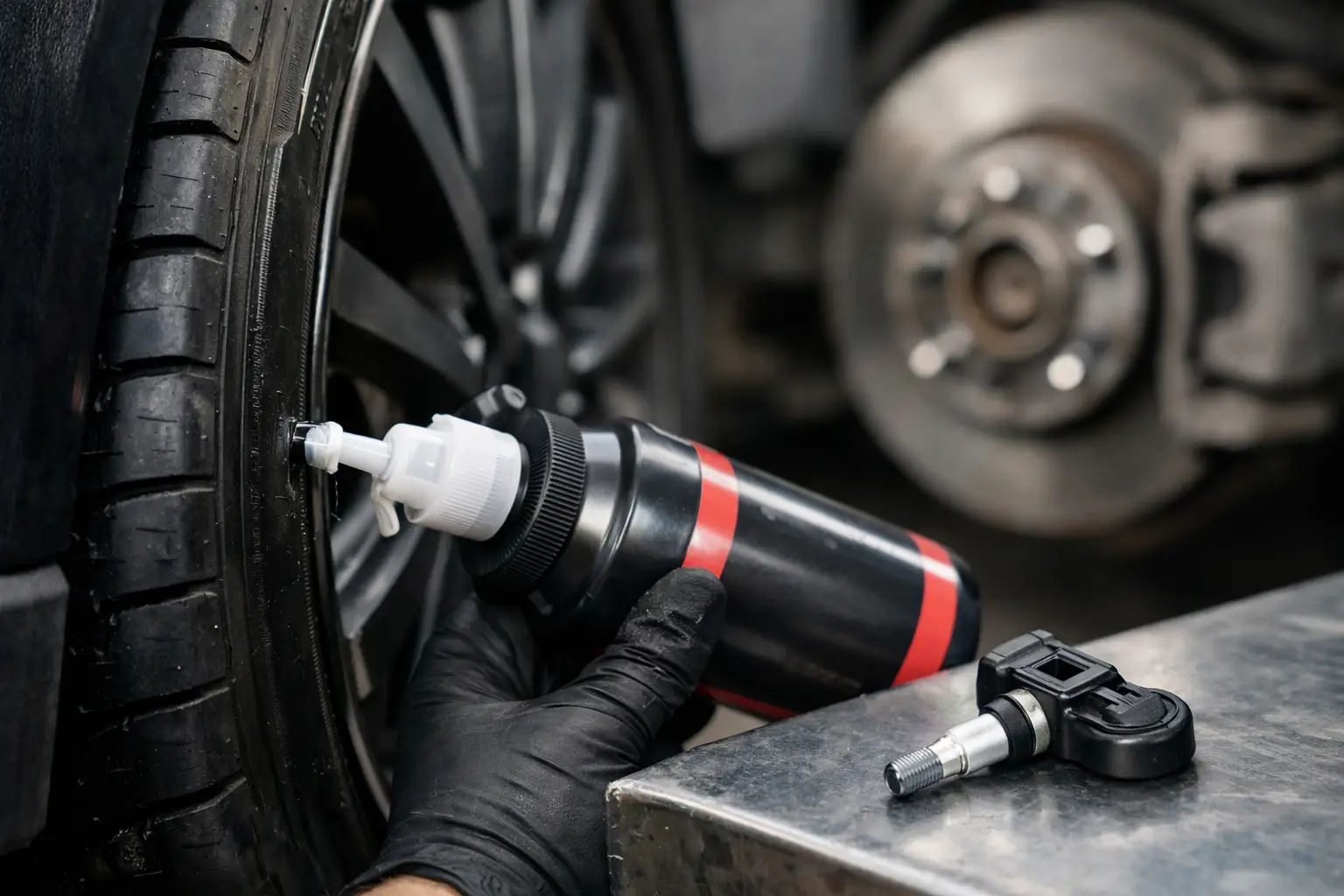
A flashing low-tire-pressure light after using a can of fix-a-flat can turn a quick roadside solution into a second problem. So, can tire sealant damage sensors? Yes, it can – particularly the direct TPMS sensors mounted inside the wheel. But the result depends on the sealant used, how much entered the tire, the location of the puncture, and how quickly the tire is professionally inspected and cleaned.
For a Denver driver trying to get home, make a meeting, or keep a work vehicle moving, tire sealant may be a reasonable temporary choice when there is no safer option. The key word is temporary. It is not a replacement for a proper puncture repair, and it can complicate the work needed afterward.
Why tire sealant can damage TPMS sensors
Most newer vehicles use a direct tire pressure monitoring system, or TPMS. Each wheel contains a small electronic sensor, usually attached to the valve stem or secured inside the rim. It measures air pressure and, on many vehicles, temperature, then sends that information to the vehicle.
When aerosol sealant is injected through the valve stem, it enters the tire as a liquid or foam. As the tire rotates, the material spreads across the inner liner. Some sealants are formulated to be more sensor-friendly than others, but any product can leave residue around the sensor, its pressure port, or the valve core.
That residue can interfere with accurate readings. In more serious cases, it can clog the sensor opening, corrode valve-stem components, affect the sensor battery or electronics, or make removal and service difficult. A sensor does not always fail immediately. It may begin reporting an inconsistent pressure, trigger a TPMS warning, or stop communicating after the tire has been driven.
The risk is higher when a large amount of sealant is used, when the tire is driven for many miles afterward, or when the sealant remains inside for weeks or months. Temperature swings also matter. Denver’s cold mornings and hot pavement can change tire pressure on their own, making it harder to tell whether a warning light is caused by normal pressure changes, a continuing leak, or a contaminated sensor.
Not every TPMS setup has an in-wheel sensor
Some vehicles use an indirect TPMS system. Instead of pressure sensors inside each wheel, it relies on wheel-speed information from the ABS system to identify a tire rotating differently because it is underinflated. Tire sealant cannot directly coat or clog an indirect TPMS sensor because there is no pressure sensor inside the tire.
Even then, sealant is not automatically harmless. An uneven amount of material inside a tire can affect balance, create vibration, and mask a puncture that still needs attention. The vehicle may need a TPMS reset after the tire is repaired and inflated correctly.
What sealant does to the tire repair itself
TPMS damage is only one concern. A tire filled with sealant must be inspected from the inside before anyone can determine whether it is safely repairable.
Professional repair standards generally require a technician to remove the tire from the wheel, inspect the inner liner, locate the puncture, and repair an eligible tread-area injury with the correct combination of an interior patch and a repair stem. A plug pushed into the tread from the outside may slow a leak, but it does not reveal whether the tire was driven underinflated or whether the inner liner has been damaged.
Sealant makes that inspection messier and more time-consuming. The wheel, tire bead, valve stem, and TPMS sensor may need to be cleaned before the tire can be repaired and reinstalled. In some cases, the puncture is outside the repairable tread area, the tire has internal damage, or the sealant cannot be fully cleaned from critical components. Replacement is then the safer answer.
This is why many repair facilities ask whether sealant has been used before starting work. It is not a reason to hide the detail. Telling the technician upfront helps them prepare correctly and inspect the tire safely.
Signs your sensor may have been affected
A TPMS warning light does not prove tire sealant damaged a sensor. The tire may still be losing air, the system may need to be reset, or another wheel may have a low reading. Still, these signs warrant a professional check:
- The TPMS light stays on after the tire is repaired and inflated to the door-jamb pressure specification.
- The dashboard shows no pressure reading for one tire, or displays dashes instead of a number.
- The reading changes erratically or does not match a verified gauge reading.
- A warning appears shortly after sealant was used, especially if the tire was driven a significant distance.
Do not rely only on the dashboard display. A technician can verify actual pressure with a calibrated gauge, inspect the tire and valve stem, scan the TPMS system for fault codes, and check whether the sensor is transmitting correctly. If a sensor needs replacement, it must also be programmed or relearned to the vehicle so the system can identify it.
When using sealant makes sense – and when it does not
A sealant can be useful as an emergency measure for a small puncture in the tread area when the tire still holds enough air to drive briefly and no spare or immediate professional help is available. Follow the product instructions closely, drive only as far as necessary, avoid highway speeds if the instructions limit speed, and arrange service as soon as possible.
It is a poor choice for a sidewall puncture, a cut, a blowout, a damaged wheel, a tire that has come off the rim, or a tire driven flat. Sealant cannot rebuild structural damage. It also should not be used to keep a fleet vehicle or family vehicle in service indefinitely when predictable, safe operation matters.
Before adding any product, check your vehicle owner’s manual. Some manufacturers provide specific guidance about sealant and direct TPMS sensors. If your vehicle has a factory tire mobility kit, use only the approved sealant and follow its stated limitations. Mixing products or using an expired can adds uncertainty when you are already dealing with a flat.
The better next step after a flat
If you have used sealant, avoid the temptation to keep topping off air and driving normally. Note the brand of sealant, the approximate amount used, and how far you drove. Then schedule an inspection promptly.
A proper mobile tire service can often assess the tire where it sits – at your driveway, office, parking lot, or fleet location. The technician can check the puncture, remove the tire when appropriate, inspect the inner liner, clean sealant residue, repair or replace the tire based on its condition, and test the TPMS sensor before putting the wheel back into service.
At Tires Xpress, that work is performed with professional-grade equipment designed for correct mounting, inflation, balancing, and TPMS service without requiring you to spend part of your day in a waiting room. If the tire is repairable, the goal is to return it to service safely. If it is not, you get a clear explanation of why and a practical path forward.
How to protect your TPMS after an emergency repair
The best protection is speed: get the tire inspected soon after using sealant. The less time residue spends circulating inside the tire, the better the chance of cleaning the wheel and sensor before it creates a larger issue.
Ask for the TPMS sensor and valve stem to be inspected during the repair. A technician should confirm that the pressure reading matches a manual gauge and that the sensor communicates with the vehicle after reinstallation. If a sensor is replaced, make sure the relearn procedure is completed before considering the job finished.
Finally, keep a dependable pressure gauge in the vehicle. TPMS is a warning system, not a substitute for routine pressure checks. Correct inflation supports handling, braking, tire life, and fuel efficiency – and helps you spot a slow leak before an emergency can of sealant feels like the only option.
A temporary fix can get you out of a difficult moment, but the right follow-up protects the tire, the sensor, and everyone riding in the vehicle.