
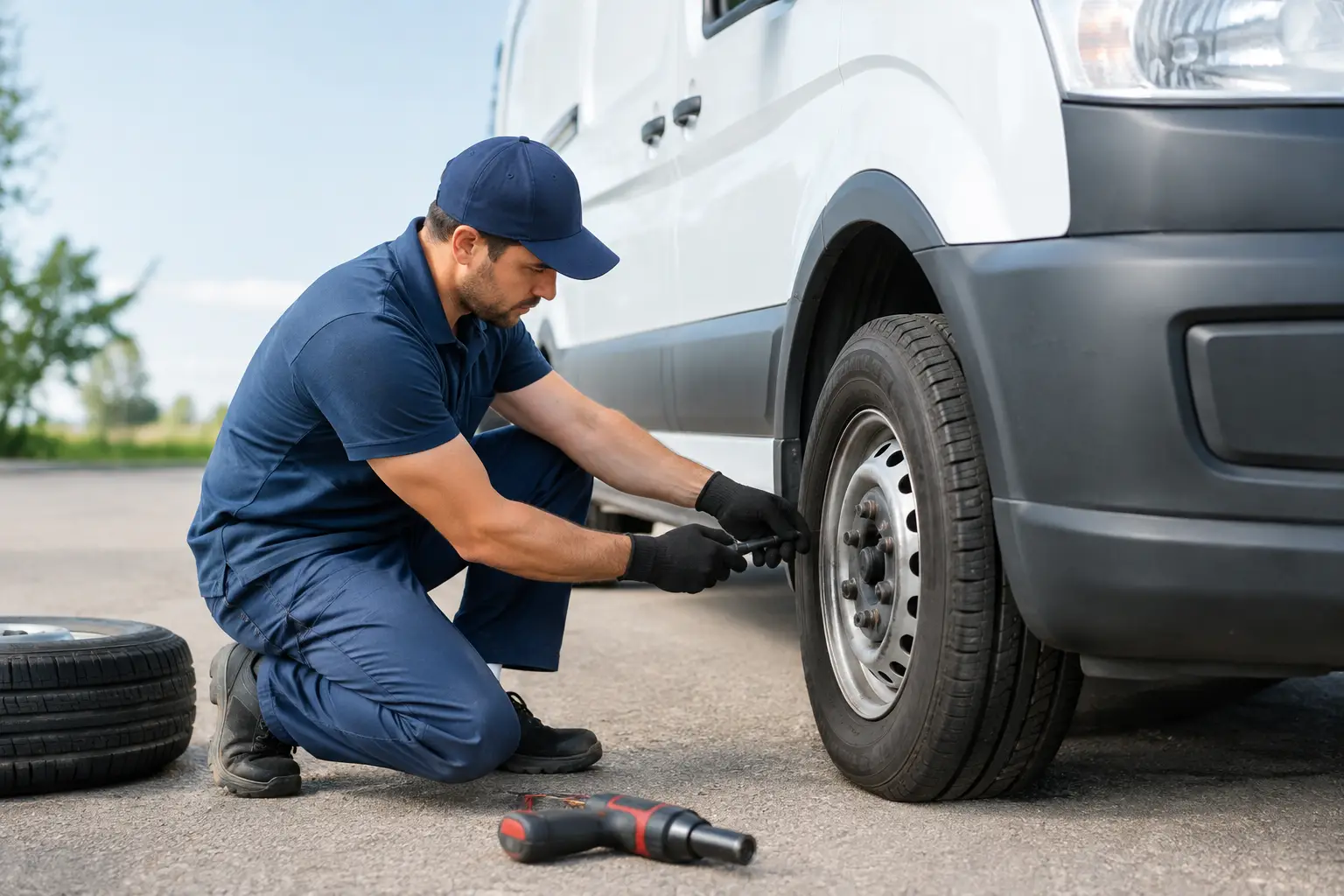
A delivery van with a low tire is not a small maintenance issue when it is loaded, scheduled, and expected at the next stop in 15 minutes. This delivery van tire case study follows a representative Denver fleet scenario to show how a structured mobile response can protect drivers, preserve routes, and prevent a single tire problem from disrupting an entire workday.
The point is not that every puncture requires a new tire or every low-pressure warning signals a major failure. The point is that fleets need a professional decision quickly, where the van is parked, using the same inspection and service standards expected at a tire shop.
Delivery Van Tire Case Study: The Route at Risk
Consider a local delivery operation with 18 cargo vans running weekday routes across Denver. The vans make frequent starts and stops, carry changing loads, encounter construction debris, and spend long hours on hot pavement in summer and unpredictable winter conditions. Tire wear is part of the operating reality.
At 7:10 a.m., a driver completing a pre-route walkaround notices that the right rear tire appears low. The van is loaded and parked at the fleet yard. Its first delivery window begins at 8:00 a.m., and the fleet manager has no spare vehicle immediately available.
The driver could add air and leave, hoping the tire holds. That choice may seem efficient, but it creates risk. A slow leak can become a rapid pressure loss under load. Operating on an underinflated tire also builds heat, accelerates shoulder wear, hurts fuel economy, and can damage the tire’s internal structure. If the tire fails on route, the issue becomes a roadside interruption rather than a controlled maintenance event.
Instead, the manager requests on-site tire service. A mobile technician arrives with professional-grade equipment to inspect the tire, locate the source of the pressure loss, and determine whether a safe repair is possible. The van stays at the yard, the driver stays available, and the manager receives status updates without calling around to shops or arranging a ride.
The Inspection Determines the Right Fix
A low tire does not automatically mean a repairable puncture. The technician first checks cold tire pressure, visible tread condition, sidewalls, valve stems, wheel condition, and the tire’s overall wear pattern. A tread-depth gauge helps establish whether the tire still has useful service life. The technician also checks for signs that the van was driven at low pressure, including scuffing, heat damage, or compromised sidewall integrity.
In this representative case, the source is a screw in the center portion of the tread. The tire has even wear, sufficient tread depth, and no evidence of internal damage from extended low-pressure operation. That matters because a proper repair depends on more than simply finding the object that caused the leak.
A safe repair generally requires the injury to be within the repairable tread area, not too large, and free from damage that affects the tire’s structure. A puncture near the shoulder or sidewall is a different situation. So is a tire that has been run severely underinflated. In those cases, replacement is often the responsible answer, even when the tire appears acceptable from the outside.
The technician removes the wheel, inspects the tire from the inside, repairs the puncture using an industry-appropriate method when eligible, installs the wheel, inflates it to the vehicle specification, and torques the lug nuts precisely. The tire is then rechecked for leaks. This is not a parking-lot shortcut. It is a complete service process performed at the fleet location.
Why Mobile Service Changes the Downtime Equation
The repair itself may take less time than the traditional shop process around it. With a conventional appointment, someone must drive the van to a tire shop, wait for intake, wait for a service bay, authorize work, and return the vehicle to the fleet. If the tire is not repairable, the delay can grow while the shop sources the right commercial tire.
Mobile service removes much of that nonproductive time. The technician comes to the van, whether it is at a warehouse, office lot, jobsite, or driver driveway. The fleet avoids towing for many non-drivable situations, avoids sending another employee to shuttle drivers, and keeps the manager focused on route coverage rather than service logistics.
For a delivery business, the real cost of a tire issue is not limited to the repair invoice. It can include missed delivery windows, overtime, reassigned packages, customer communication, driver downtime, and pressure on the rest of the fleet. A fast inspection and clear recommendation let managers make decisions before those secondary costs compound.
Tires Xpress is built around that operating need, bringing mounting, balancing, inflation, repair, torque, and TPMS equipment directly to fleet locations. For account customers with urgent fleet needs, responsive support can be especially valuable when a problem occurs outside a standard service window.
When Replacement Is the Better Business Decision
Now consider a different outcome. During inspection, the technician finds that the screw entered close to the tire shoulder. The tire also has uneven wear caused by a period of low inflation. Repair is no longer the right recommendation.
Replacing one tire may feel like an unwelcome expense, but using a compromised tire can cost much more. A delivery van often carries substantial cargo weight, and its tires absorb constant curb contact, braking forces, and tight turns. Reliability matters more than squeezing the last few miles from a tire that no longer meets a safe standard.
The replacement decision should account for the van’s tire size, load rating, speed rating, tread condition on the matching tire, vehicle manufacturer requirements, and the fleet’s operating conditions. A light-duty cargo van that runs city routes may need a different tire priority than one that regularly travels highways with heavier loads. Price matters, but the lowest-cost tire is not always the lowest-cost operating choice.
If a replacement is needed, having the correct tire delivered and installed on site can keep the decision moving. The technician can mount and balance the new tire, install it, set pressure, torque the wheel hardware, and confirm the TPMS status when applicable. The fleet manager receives a clear record of what was found and what was completed.
What This Case Study Reveals About Preventive Tire Care
Emergency service keeps a route from collapsing. Preventive tire management reduces how often that emergency happens. Delivery fleets should treat tire checks as a scheduled operating task, not an afterthought for when a dashboard warning appears.
A practical program starts with regular pressure checks when tires are cold, documented tread-depth inspections, rotation at appropriate intervals, and prompt evaluation of TPMS warnings. Drivers should also be trained to report pulls, vibration, visible damage, repeated pressure loss, and changes in ride quality. These symptoms do not always point to the tire alone, but they deserve attention before they become a roadside event.
Fleet managers should watch for patterns. If several vans show outer-edge wear, pressure control may be inconsistent. If one vehicle repeatedly loses air, a damaged wheel, valve stem, or recurring puncture risk may be involved. If tires wear unevenly across the fleet, alignment, suspension components, loading practices, or route conditions may be contributing.
The right service schedule depends on mileage, load, vehicle type, routes, and season. Denver’s temperature swings also make pressure monitoring more important. A tire can lose pressure as temperatures drop, while hot pavement and heavy loads raise operating temperatures. There is no single interval that fits every delivery operation, but there is a clear advantage to finding issues early.
A Better Response Plan for the Next Tire Problem
A fleet does not need to predict every flat tire. It needs a simple plan for responding without confusion. Drivers should know who to contact, what vehicle information to provide, and whether the van is in a safe location. Managers should have tire sizes, preferred specifications, service authorization details, and a way to receive progress updates quickly.
The first question should be safety: Is the vehicle safe to drive, or should it remain parked? The second is diagnosis: Is the tire repairable, damaged beyond repair, or affected by another mechanical issue? The third is operational: Can the route continue with a replacement vehicle, a quick mobile repair, or an on-site tire replacement?
When those decisions happen quickly and professionally, a low tire becomes a manageable interruption rather than a lost day. The best time to build that response plan is before the next van leaves the lot.