
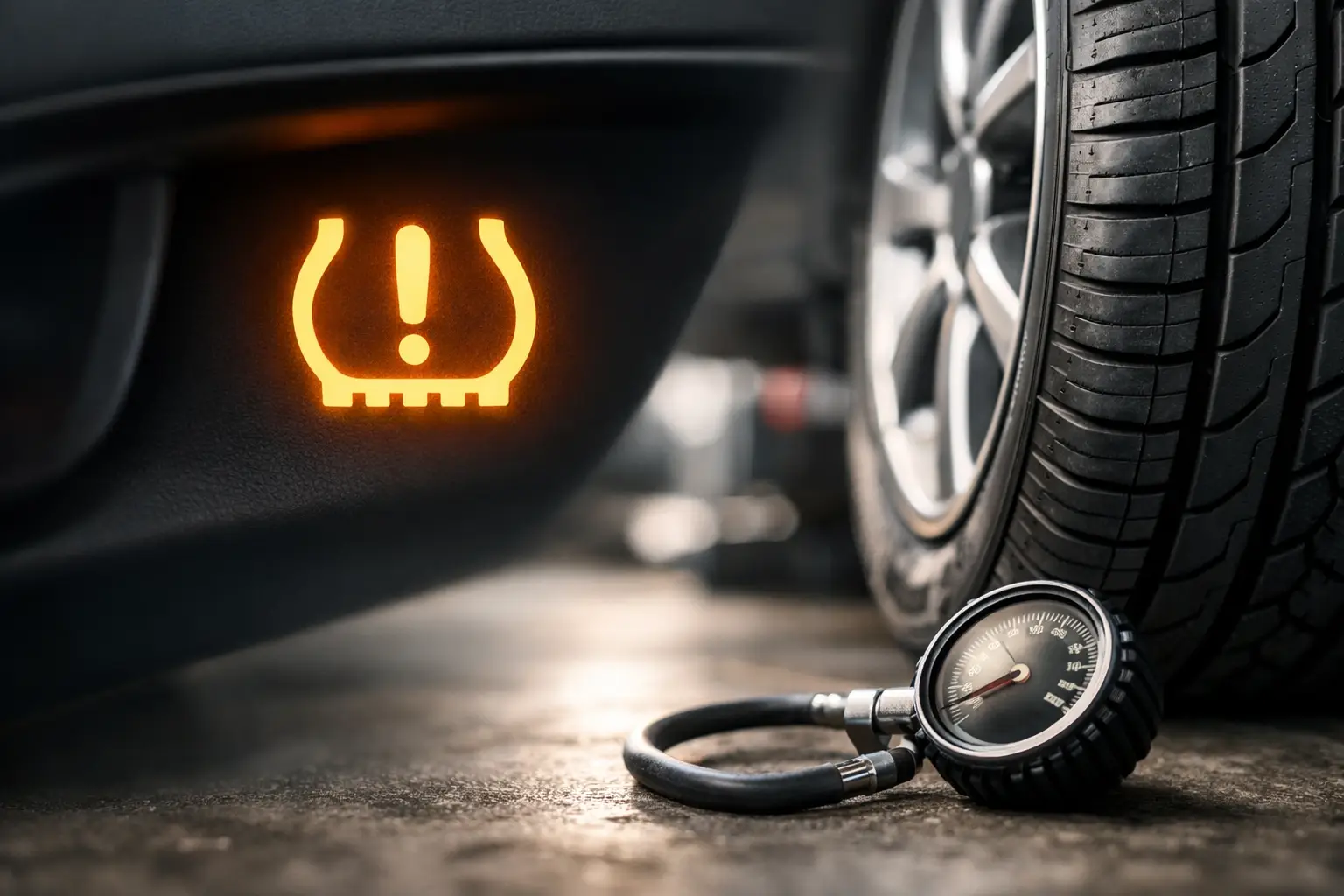
A TPMS warning can appear when you are already running late, loading kids into the car, or parked at the office. So, what does TPMS light mean? In most vehicles, it means one or more tires may be significantly underinflated. It can also point to a problem with the monitoring system itself. Either way, the light is asking for attention before a small pressure issue becomes a flat, uneven tire wear, poor handling, or a roadside interruption.
What does the TPMS light mean?
TPMS stands for Tire Pressure Monitoring System. Your vehicle uses this system to alert you when tire pressure drops below the manufacturer’s warning threshold. The symbol usually looks like a cross-section of a tire with an exclamation point in the center. Some dashboards may display a message such as “Check Tire Pressure” instead.
A tire can lose pressure for ordinary reasons, including a sharp temperature drop, a small puncture, a leaking valve stem, or a wheel that is no longer sealing correctly around the tire bead. It does not always mean a tire is visibly flat. In fact, a slow leak can trigger the warning while the tire still looks normal at a glance.
Treat the warning as an early alert, not a reason to panic. The goal is to check the tire pressure promptly and find out why it changed.
Solid TPMS light vs. flashing TPMS light
The way the light behaves provides a useful clue.
A solid TPMS light usually means low pressure
If the TPMS light comes on and stays on, one or more tires are likely below the recommended pressure. Start by checking all four tires when they are cold, meaning the vehicle has been parked for at least a few hours. Use a quality tire gauge rather than relying only on how the tires look.
Find the recommended cold tire pressure on the placard inside the driver’s door jamb. This number is set by the vehicle manufacturer for your specific vehicle. Do not use the maximum PSI printed on the tire sidewall as your inflation target. That number describes the tire’s maximum capability, not the pressure your vehicle needs for safe everyday driving.
A flashing TPMS light usually means a system fault
When the light flashes for about a minute after startup and then remains on, the vehicle may be reporting a TPMS malfunction. One or more sensors may have a dead battery, been damaged, lost communication, or not been programmed correctly after tire service.
This is common on older vehicles because TPMS sensor batteries often last five to 10 years, depending on the sensor and driving conditions. A flashing light does not automatically mean your tire pressure is correct. Check the tires manually first, then have the TPMS system diagnosed and repaired.
Why Denver weather can trigger the warning
Colorado temperature swings can affect tire pressure quickly. As a general rule, tire pressure changes by about 1 PSI for every 10-degree change in outside temperature. A tire that was properly inflated during a warm afternoon can be several PSI low after a cold overnight front moves through Denver.
That does not mean the warning is “just the weather” and should be ignored. Cold weather may reveal a tire that was already slightly low, a slow puncture, or a valve stem leak. Inflate the tire to the door-placard recommendation, then monitor it. If the warning returns within days or weeks, the tire needs a closer inspection.
Seasonal tire changes are another time to pay attention. Different wheels may use different sensors, and the vehicle may require a relearn procedure after a winter or summer tire swap. A professional technician can confirm that each sensor communicates correctly and that the system recognizes its position on the vehicle.
What to do when your TPMS light comes on
First, reduce speed if the vehicle feels unstable, pulls to one side, vibrates, or has a visibly low tire. Avoid hard braking, fast cornering, and long highway driving until you know what is going on. If a tire is flat or badly deflated, pull over in a safe location rather than trying to drive to an air pump.
If the tires appear intact, check pressure with a gauge and compare each reading with the driver-door placard. Add air as needed, but do not overinflate to make the warning disappear. Overinflation can reduce the tire’s contact patch, affect ride quality, and contribute to uneven wear.
After correcting the pressure, drive the vehicle for a short distance. Many TPMS systems update automatically once the car is moving. Others require a reset through the dashboard menu or a specific relearn process. Your owner’s manual can tell you which system your vehicle uses.
If one tire is much lower than the others, or the pressure drops again after being filled, assume there is a leak until proven otherwise. A nail in the tread, a cracked valve stem, corrosion around the wheel, or damage from a pothole can all cause recurring pressure loss.
When a tire can be repaired and when it cannot
A puncture in the center portion of the tread can often be repaired safely if the tire has not been driven while severely underinflated. A proper repair is completed from inside the tire after a technician inspects the damage. It is more than pushing a temporary plug into the hole from the outside.
Damage near the sidewall or shoulder area usually cannot be repaired because that part of the tire flexes heavily while driving. A tire also may need replacement if it has internal damage from being driven flat, exposed cords, a large cut, a sidewall bubble, or tread worn below a safe level.
This is where a visual check alone falls short. A tire can hold air after inflation but still have internal damage that affects safety. Professional inspection helps separate a simple repair from a tire that should not return to the road.
Can you drive with the TPMS light on?
It depends on why the light is on and how low the pressure is. If all tires are at the correct cold pressure and the light is flashing because of a sensor issue, you can generally drive cautiously while arranging service. You will still need to check tire pressure manually because the electronic warning may not work properly.
If the light is solid and a tire is only slightly low, inflating it to the proper pressure may resolve the issue. However, do not put off an inspection if the pressure loss is unexplained. A slow leak can become a sudden flat at highway speed or during a busy commute.
Do not continue driving on a visibly flat tire. Even a short distance can destroy the tire’s internal structure and turn a repairable puncture into a replacement. It can also damage the wheel, which adds cost and keeps your vehicle off the road longer.
TPMS service after new tires or wheel work
TPMS sensors are mounted inside the wheel near the valve stem on many modern vehicles. During tire installation, rotation, wheel replacement, or seasonal changes, the sensors should be handled carefully and tested. A damaged sensor, leaking sensor seal, or missing relearn step can leave the warning light on after otherwise routine service.
Professional-grade TPMS equipment can scan each sensor, verify battery and signal status, identify failed units, and program replacement sensors to communicate with the vehicle. The technician should also inspect valve stems, use the correct service kit when needed, set tire pressures accurately, and torque wheels to specification.
For drivers who cannot lose half a day at a shop, Tires Xpress can perform mobile tire and TPMS service at a home, workplace, or parking location. Having the right diagnostic tools and tire equipment on-site makes it easier to address a warning before it becomes a bigger schedule problem.
A simple habit that prevents bigger tire problems
Check tire pressure once a month and before long drives, even when no dashboard light is on. TPMS is a valuable safety backup, but it does not replace regular tire inspections. Look for nails, cuts, uneven wear, cracking, and tires that repeatedly need air.
A TPMS light is your vehicle’s way of asking for a quick check, not something to cover with tape or postpone until the next oil change. Give it timely attention, and you are far more likely to keep your tires, your schedule, and your next drive on track.