
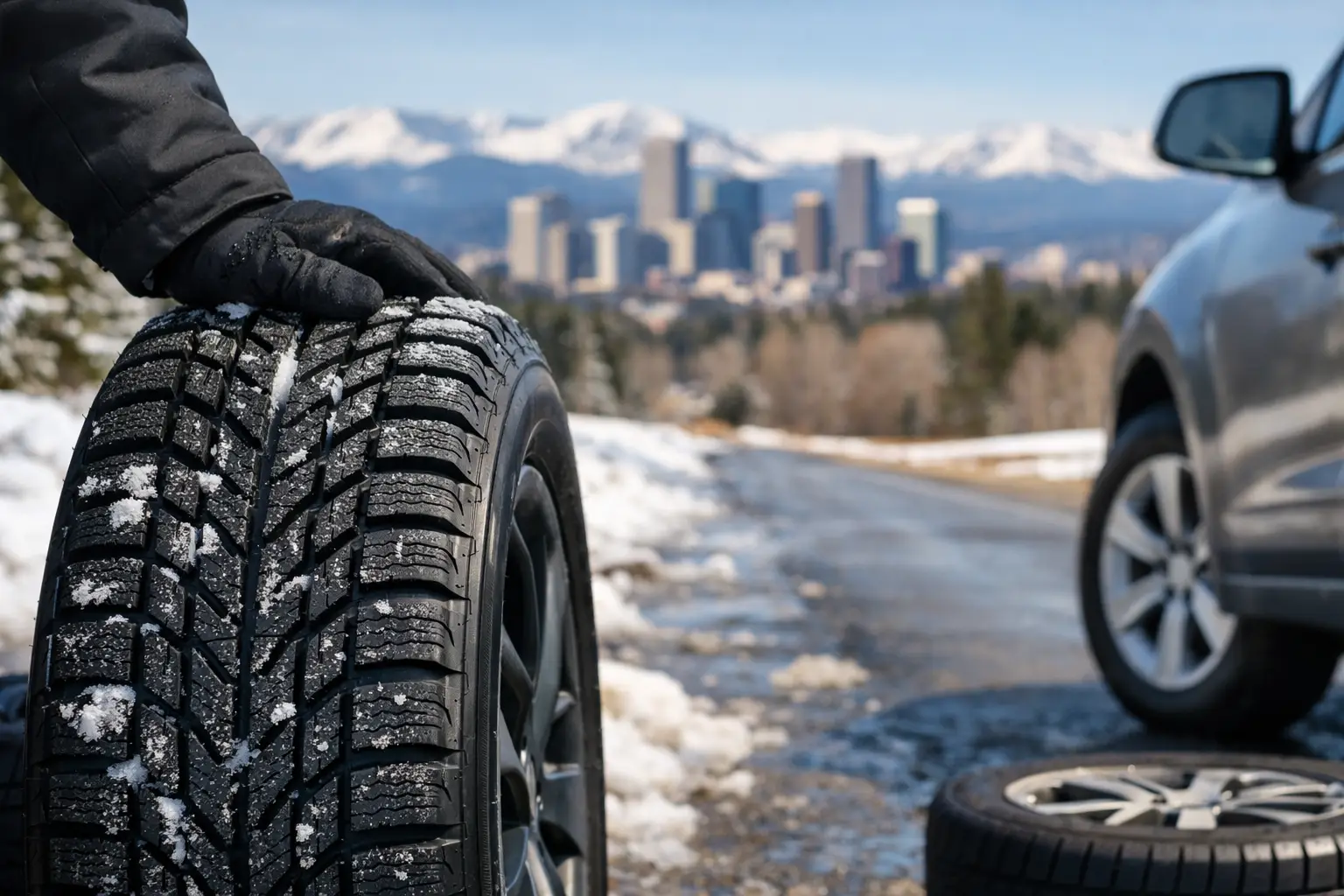
A Denver morning can start below freezing and end sunny in the 60s, which makes deciding when to change winter tires less obvious than simply looking at the calendar. The right time depends on consistent temperatures, where you drive, your tire condition, and whether mountain trips are still on your schedule. A well-timed seasonal tire change protects your traction, helps tires last longer, and keeps your vehicle ready for the roads you actually travel.
When to Change Winter Tires in Denver
For most Denver drivers, it is time to remove winter tires when daytime temperatures are consistently above 45°F. That temperature matters because winter tires are built with a softer rubber compound designed to stay flexible in cold weather. Once pavement temperatures rise, that soft rubber wears faster and can feel less precise during warm-weather braking and cornering.
The key word is consistently. One warm week in February does not mean winter is finished in Colorado. Late snowstorms, overnight freezes, and slick early-morning bridges can still create hazardous conditions well into spring. Instead of changing tires after the first warm day, watch the forecast for a sustained stretch of milder weather.
For many Front Range commuters, late March through April is the typical transition period. But the best date can shift from year to year. If your regular drive stays in central Denver and daytime highs have settled into the 50s, a spring swap may make sense. If you drive before sunrise, commute through foothill areas, or travel I-70 toward the mountains, keeping winter tires on longer may be the safer choice.
Temperature Is Better Than a Calendar Date
A calendar can provide a rough reminder, but temperature gives you the more useful answer. Winter tires work best when temperatures are around 45°F or lower. At that point, their flexible compound and specialized tread design help them grip cold, wet, snowy, and icy pavement more effectively than many all-season tires.
As conditions warm up, summer or all-season tires become the better fit. Their compounds are designed to handle heat without wearing as quickly, and their tread patterns generally provide better steering response on dry and rainy roads. Leaving winter tires on through a long Denver summer can shorten their usable life significantly.
That does not mean every day must be above 45°F before you schedule service. Look at the overall pattern, including overnight lows and the time you normally drive. A vehicle used at 7 a.m. may still encounter cold pavement even when the afternoon forecast looks mild. Drivers with flexible schedules can also choose a service appointment after the risk of a major cold snap has passed rather than competing for last-minute availability after the first warm weekend.
Mountain Driving Changes the Decision
Denver weather and mountain weather are not the same thing. If your vehicle regularly heads to ski areas, mountain towns, or high-elevation job sites, change winter tires later than a driver who stays on the metro area’s main roads. Snow, slush, and freezing temperatures can remain common at elevation long after Denver has moved into spring.
Before swapping, consider your planned travel for the next several weeks. A single spring storm on a mountain pass can make the convenience of an early tire change feel less valuable. Colorado traction requirements can also apply during active weather conditions in designated mountain corridors, so ensure your vehicle and tires are appropriate for the routes you plan to take.
When to Put Winter Tires Back On
The same temperature rule works in reverse when fall arrives. Plan to install winter tires once temperatures are consistently approaching 45°F, often in October or early November around Denver. Waiting until the first major snowstorm is a common mistake. By then, appointment availability can tighten, roads can become crowded, and you may be driving on tires that are not designed for cold pavement.
Winter tires are not only for deep snow. Their value begins when temperatures fall and normal tires start becoming less flexible. Cold rain, frost, black ice, and packed snow in an office parking lot can all reduce traction. Installing winter tires before the first major weather event gives you time to drive with confidence rather than reacting after conditions turn difficult.
Check Tread Depth Before You Schedule a Swap
Seasonal timing is only part of the decision. A winter tire with low tread cannot deliver the traction it was designed to provide, even if it is technically still mounted during winter weather. Winter tires rely on deep tread channels and thousands of small gripping edges, called sipes, to move snow and slush away from the contact patch.
A tire may meet a basic legal minimum tread depth and still be underperforming for Colorado winter driving. Many tire professionals recommend considering winter tire replacement when tread reaches 6/32 of an inch, especially if you drive in snow or make regular mountain trips. At this point, the tire may have noticeably less ability to evacuate slush and maintain traction in deeper snow.
Also inspect for uneven wear, cracks, bulges, puncture repairs, and aging rubber. Uneven tread can point to an alignment, suspension, or inflation issue that should be addressed before mounting a different set of tires. A seasonal tire change is an ideal time for a full visual inspection because each wheel is already off the vehicle.
Do Not Forget Tire Age and Storage
A winter tire can look acceptable at a glance while its rubber has hardened with age. Check the DOT date code on the sidewall to determine when it was manufactured. Tires do not all age at the same rate, but storage conditions, mileage, sun exposure, and temperature swings all affect the rubber over time.
Proper storage helps preserve the set you are not using. Tires should be clean, dry, and kept away from direct sunlight, heat sources, solvents, and standing moisture. If tires are stored without wheels, keep them upright to reduce the chance of distortion. Mounted tire-and-wheel assemblies can be stacked carefully or stored on a rack. Labeling each tire by its previous position on the vehicle also makes it easier to plan the correct rotation at the next installation.
A professional seasonal swap should include more than moving tires from one location to another. The wheels should be installed with the correct torque specification, tire pressures should be set for the current conditions, and the technician should inspect valve stems, tread, and visible wheel damage. If your vehicle uses a tire pressure monitoring system, the service should account for TPMS sensors and alert you to any issue that could trigger a warning light later.
Winter Tires, All-Season Tires, and Your Driving Routine
Not every Denver driver needs the same setup. Dedicated winter tires are the strongest choice for drivers who face frequent snow, steep terrain, early-morning commutes, or mountain travel. They provide meaningful cold-weather traction, but they require a seasonal change and a place to store the off-season set.
All-season tires can be a practical option for drivers who stay mostly on plowed city roads, drive fewer miles, and can delay travel during severe storms. However, not all all-season tires perform equally in winter conditions. Some carry a three-peak mountain snowflake rating, while others are built primarily for mild weather. The name on the sidewall matters more than the broad category printed on a sales label.
All-weather tires can offer a middle ground for certain drivers. They are designed for year-round use and may carry winter traction certification, but they still involve trade-offs in tread life, warm-weather handling, and maximum snow performance compared with dedicated winter tires. The right choice comes down to how, when, and where you drive.
Make the Seasonal Change Easy
The best time to schedule a tire change is before weather forces the decision. Booking a planned swap gives you more control over your day, whether your vehicle is at home, at work, or parked at a fleet location. It also creates an opportunity to catch low tread, a slow leak, damaged valve stems, or an aging TPMS sensor before those issues become a roadside interruption.
Tires Xpress brings professional-grade mounting, balancing, inflation, inspection, and precision torque work directly to Denver drivers, helping seasonal tire service fit around a busy schedule instead of taking over the day.
When Denver’s temperatures settle into their next season, let your tires follow suit. The right set on the road is one of the simplest ways to make every commute, school run, and mountain drive feel more prepared.