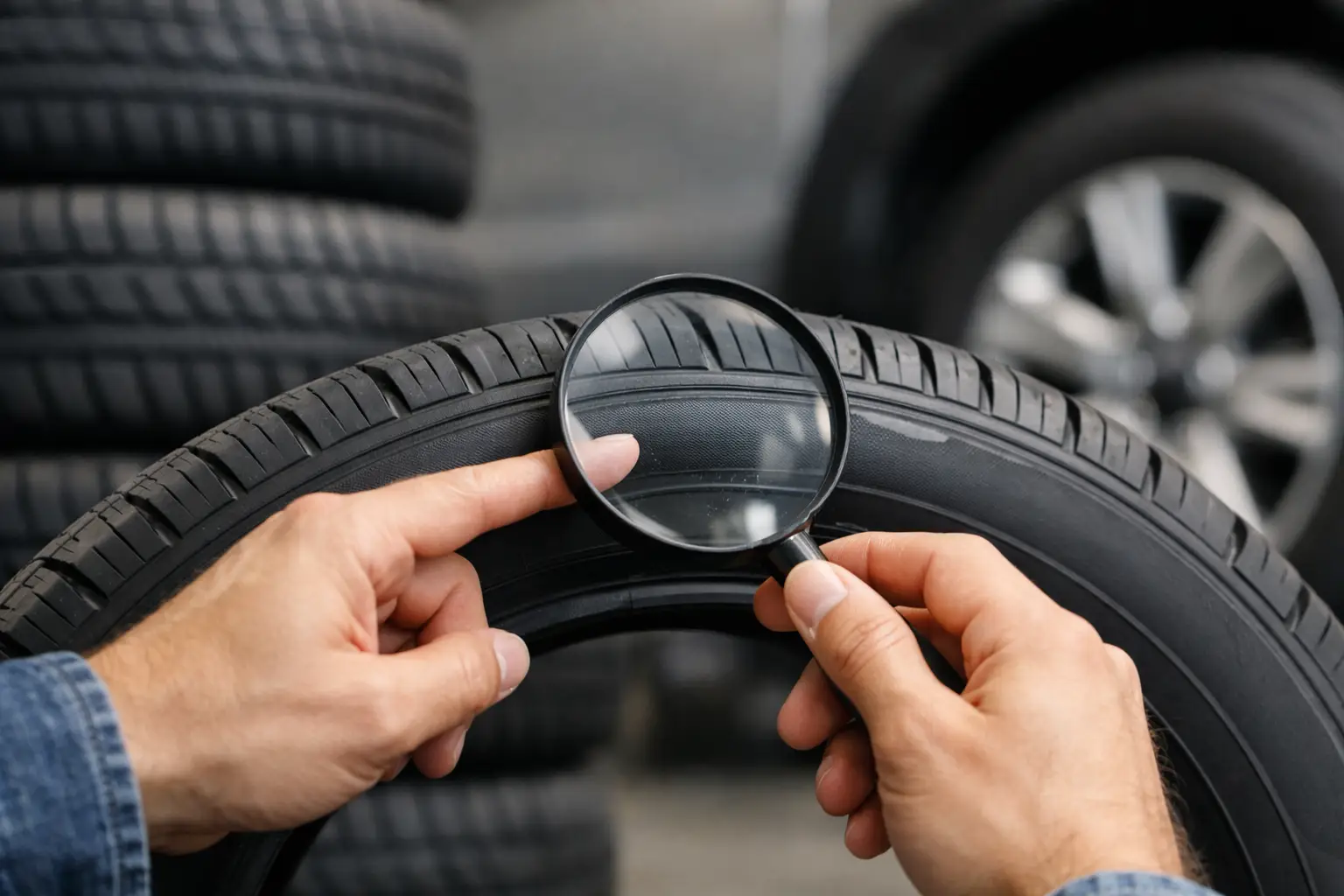
A tire sidewall can look like a string of random letters and numbers when you are standing in a driveway with a flat or shopping for a replacement. Knowing how to read tire size makes that code useful. It helps you order the right tire, avoid fitment issues, and understand whether a tire matches the weight, handling, and seasonal demands of your vehicle.
The most common passenger-tire marking looks like this: P215/65R17 98H. Each section identifies a specific part of the tire’s construction and capability. Here is what it means in plain language.
How to Read Tire Size on the Sidewall
Start by locating the full size code on the outer sidewall. It is usually printed in large raised lettering near the tire brand and model. In P215/65R17 98H, read from left to right.
P: Tire type or service description
The first letter is not present on every tire. P means P-metric, a tire designed primarily for passenger vehicles such as sedans, crossovers, minivans, and many light-duty SUVs.
You may also see LT, which means Light Truck. LT tires are built for heavier-duty work, including certain pickups, vans, towing applications, and commercial use. They typically have stronger construction and may require higher inflation pressure. An LT tire is not automatically a better replacement for a P-metric tire. It can change ride comfort, weight, and the way the vehicle performs, so match the vehicle manufacturer’s specifications unless a professional recommends a different setup for your use.
Some tires begin directly with a number, such as 225/60R18. That is commonly a European metric size designation. The core measurements are read the same way.
215: Tire width
The first three-digit number is the tire’s nominal section width in millimeters. In this example, 215 means the tire is about 215 millimeters wide at its widest point when mounted on the correct wheel width and inflated properly.
A wider tire can provide a larger contact patch, but width alone does not guarantee better traction. The tread design, tire compound, inflation pressure, road conditions, wheel width, and vehicle setup all matter. Installing a wider tire without confirming clearance can cause rubbing against suspension components or the wheel well during turns and bumps.
65: Aspect ratio, or sidewall height
The number after the slash is the aspect ratio. 65 means the tire’s sidewall height is 65 percent of its width. For a 215/65 tire, the sidewall is approximately 140 millimeters tall.
This is why two tires with similar-looking numbers can have very different overall heights. A lower aspect ratio, such as 40 or 45, has a shorter sidewall and often gives a firmer, more responsive feel. A higher aspect ratio, such as 65 or 70, has more sidewall cushioning and can better absorb rough pavement. Neither is universally better. Denver drivers may appreciate additional sidewall protection on pothole-prone roads, while a performance-oriented vehicle may be engineered around a lower-profile tire.
R: Tire construction
The R stands for radial construction. Nearly every modern passenger and light-truck tire is radial, meaning its internal cords run across the tire from bead to bead. Radial tires are designed for stable handling, long tread life, and efficient heat management.
You may occasionally see D for diagonal or bias-ply construction, especially on some specialty, trailer, agricultural, or off-road applications. Do not assume a different construction type is interchangeable just because the diameter looks similar.
17: Wheel diameter
The final number in the basic size, 17, is the wheel diameter in inches. This tire must be mounted on a 17-inch wheel. A 16-inch or 18-inch tire will not fit, even if the width and aspect ratio appear close.
This measurement is one of the most critical details when ordering tires. The tire’s inner bead diameter must match the wheel exactly. If you are unsure whether your vehicle has factory wheels or an aftermarket wheel package, check the number stamped on the tire sidewall rather than estimating from the appearance of the wheel.
What Load Index and Speed Rating Mean
After the main size code, you will often find two more markings: a number and a letter. In P215/65R17 98H, 98H describes the tire’s load index and speed rating.
98: Load index
The 98 is the load index. It corresponds to the maximum weight the tire can carry at its specified maximum inflation pressure. Load index is not a direct pound measurement printed on the tire, so it must be referenced against an industry chart. A load index of 98, for example, is rated for 1,653 pounds per tire.
Your replacement tires should meet or exceed the load index specified for your vehicle. This matters for every driver, but it becomes especially important for loaded SUVs, work vans, pickups carrying equipment, and fleet vehicles. Choosing a lower load rating can create a safety risk and may lead to excess heat, poor handling, or tire failure under load.
H: Speed rating
The H is the speed rating, which indicates the tire’s tested ability to dissipate heat and perform at sustained speeds under controlled conditions. H is commonly associated with a maximum tested speed of 130 mph.
This rating is not permission to drive at that speed, and it does not override posted speed limits, weather conditions, tire condition, or safe driving judgment. It is primarily a compatibility and performance specification. A tire with a lower speed rating than the vehicle requires may affect handling characteristics, especially during emergency maneuvers. Match or exceed the original specification unless you have a specific, informed reason to use a different seasonal tire setup.
Other Tire Markings Worth Checking
The size code is the starting point, not the complete story. Before purchasing or installing tires, look for a few other sidewall details that can affect safety and fit.
- M+S or 3PMSF: M+S means mud and snow. The Three-Peak Mountain Snowflake symbol identifies tires that meet a more demanding snow-traction standard. For Colorado winter driving, the snowflake symbol provides a more meaningful indication of winter capability.
- XL or Extra Load: These tires are designed to carry more weight than a standard-load tire of the same size when inflated correctly. They can be appropriate for certain vehicles, but they may have different pressure requirements.
- DOT date code: The final four digits of the DOT number show the week and year the tire was made. For example, 2425 means the 24th week of 2025. Age matters, even when tread appears usable.
- Maximum pressure and load: These sidewall figures describe the tire’s limits, not necessarily the pressure you should use every day. Your vehicle’s recommended cold tire pressure is typically on the driver-side door-jamb placard.
Match the Door Placard Before You Change Sizes
The tire sidewall tells you what is currently installed. The driver-side door-jamb placard tells you what the vehicle manufacturer recommends for the vehicle’s original configuration. Check both before ordering tires.
The placard usually lists front and rear tire sizes, recommended cold inflation pressure, and sometimes a spare-tire specification. Some vehicles use staggered sizing, with wider rear tires than front tires. Others specify different pressures front to rear. Rotating or replacing those tires incorrectly can affect handling and wear.
Changing tire size can be done in certain cases, but it should be intentional. A taller tire can alter speedometer readings, gearing, clearance, and braking behavior. A shorter tire may reduce ground clearance. Moving to a different wheel diameter requires selecting a tire with an overall diameter close to the original and confirming brake, suspension, and fender clearance.
When the numbers are unclear, take a clear photo of the tire sidewall and door placard before you shop. A professional technician can verify the size, load requirement, and seasonal fitment before mounting and balancing your tires.
A correct tire size is more than a purchasing detail. It is the connection between your vehicle, the road, and every mile ahead. If you need help confirming what belongs on your vehicle, Tires Xpress can bring professional-grade tire service directly to your home, office, or fleet location – so the right answer does not have to wait for a trip to the tire shop.