
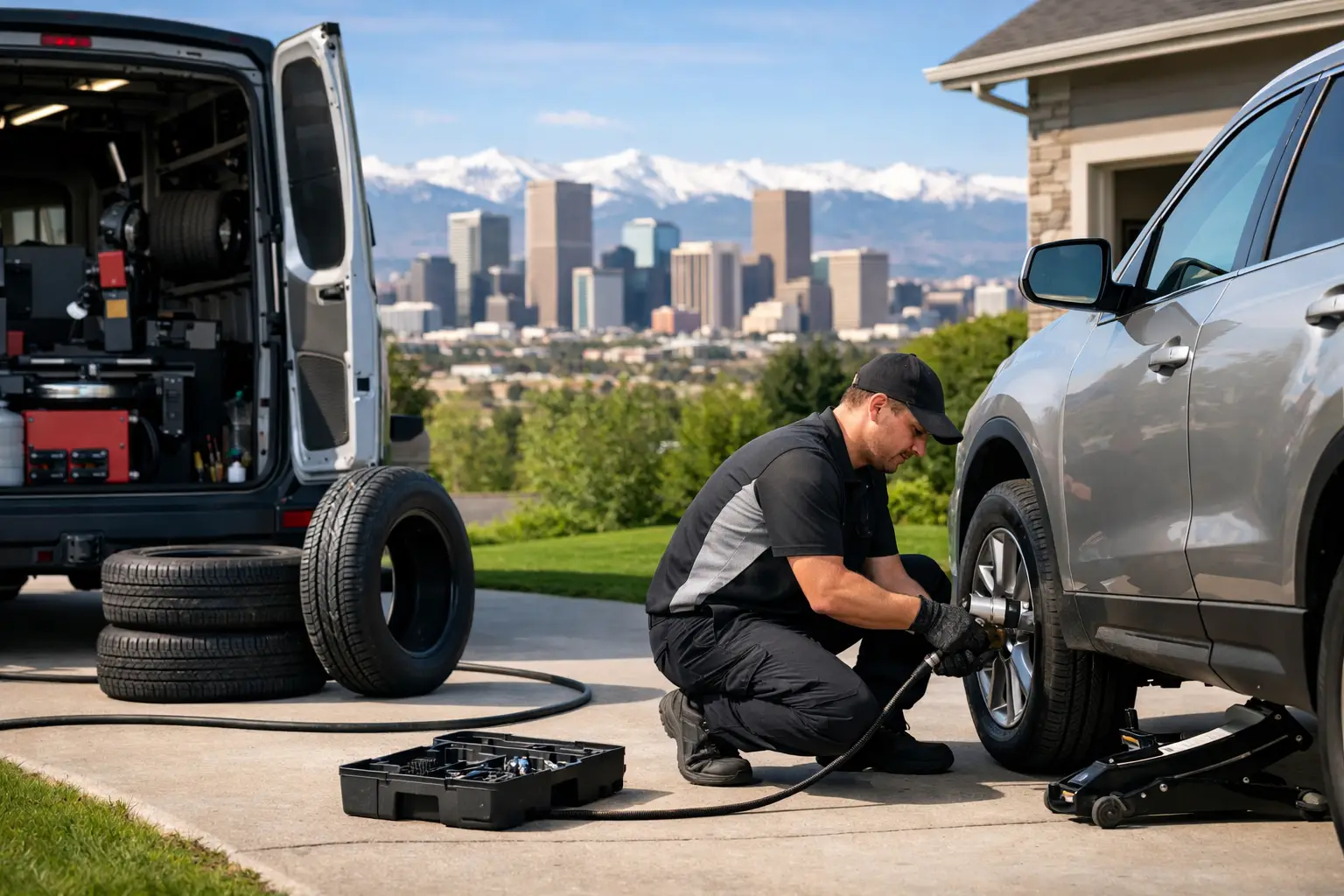
A tire problem should not require rearranging your entire day. When you schedule driveway tire service, a qualified technician comes to your home, office, apartment parking lot, or fleet location with the equipment needed to do the job correctly on-site. That means no waiting room, no second ride home, and no lost afternoon sitting at a traditional tire shop.
For Denver drivers, mobile tire service is especially practical. A sudden temperature swing, a nail in the tread, or worn tires before a mountain drive can turn into a safety concern fast. Scheduling service where your vehicle is parked gives you a direct, professional path forward without adding more disruption to an already busy day.
When to Schedule Driveway Tire Service
Driveway service is a smart choice for planned maintenance, but it is just as valuable when a tire issue catches you off guard. The best time to book is before a minor concern becomes a roadside problem, though mobile technicians can also help with many urgent situations.
Consider scheduling when your vehicle needs new tires installed, a seasonal tire change, a rotation, TPMS service, or a flat repair. You may also want an inspection if one tire keeps losing air, the steering wheel vibrates at highway speed, or your dashboard shows a tire-pressure warning. Those symptoms do not always mean you need a new set of tires, but they deserve a proper inspection.
Denver’s weather makes proactive scheduling worthwhile. Cold temperatures can lower tire pressure, while summer heat and long highway drives can expose tires that are already worn or damaged. Drivers heading toward the foothills or mountains should pay close attention to tread depth, tire condition, and inflation before leaving town. A mobile appointment lets you handle that work at home rather than trying to fit a shop visit into the day before your trip.
Planned service versus a same-day tire problem
A planned appointment gives you the most flexibility. You can choose a time when the vehicle will be accessible, select tires in advance, and have installation completed while you work from home, manage family responsibilities, or handle business at the office.
Same-day availability can be the better answer when a flat, slow leak, or damaged tire interrupts your schedule. In those cases, the technician will first determine whether the tire can be safely repaired. A puncture in the repairable tread area may be fixable, while damage to the sidewall, a large puncture, or driving on a tire while it is flat often means replacement is the safer option.
The trade-off is simple: scheduling ahead offers more appointment choices, while urgent service is designed to get you moving again quickly. Either way, you should not have to choose between proper tire work and keeping your day on track.
What Tires Xpress Can Handle in Your Driveway
Tires Xpress mobile tire service is more than a quick air fill or a temporary spare installation. It’s a properly equipped service rig bringing tire-shop capabilities to the vehicle, including mounting and balancing equipment, hydraulic jacks, portable air compressor, precision torque wrench, tread-depth gauge, valve stem tool, and TPMS equipment.
That equipment matters because tire work is safety work. New tires must be mounted correctly, balanced to reduce vibration, inflated to the vehicle manufacturer’s recommended pressure, and installed with lug nuts tightened to the proper specification. Skipping any of those steps can lead to uneven wear, poor handling, vibration, or wheel damage.
A driveway appointment can support several common needs:
- New tire delivery, mounting, balancing, and installation
- Flat tire inspection and repair when the damage is safely repairable
- Summer-to-winter and winter-to-summer tire changes
- Tire rotations to promote more even tread wear
- TPMS sensor installation and service
- Tire pressure checks, valve stem attention, and overall tire-condition inspections
Not every job is appropriate for a driveway. A severely damaged wheel, a complicated suspension concern, or extensive vehicle repair may require a full repair facility. A professional mobile technician should be clear about that distinction rather than trying to force a repair that is not safe or practical on-site.
The value of proper balancing and torque
Tire installation is not complete when the wheel is back on the vehicle. Balancing helps prevent the steering-wheel shake and uneven wear that can develop when weight is not evenly distributed around the wheel-and-tire assembly. It is especially noticeable at freeway speeds, where even a small imbalance can make a drive less comfortable.
Proper lug-nut torque is equally important. Over-tightening can damage studs, wheels, or brake components. Under-tightening can create a serious safety risk. Tires Xpress uses professional-grade torque tools and follow vehicle’s specifications, not rely on a rushed guess with an impact wrench.
How to Prepare for a Driveway Tire Appointment
Preparing is easy, and a few small details help streamline the service. Park the vehicle on a reasonably level, firm surface with enough room for the technician to work around all four wheels. A clear driveway is ideal, but an office parking space or designated fleet area can work well too.
Keep the keys available and let the technician know about anything unusual before the appointment. That includes locking wheel nuts, an aftermarket wheel setup, a TPMS warning, a tire that repeatedly loses air, or damage from hitting a pothole or curb. If you have a wheel-lock key, place it in the vehicle cup holder or have it handy. Without it, a technician may not be able to remove the wheel.
If you are purchasing tires, confirm the correct tire size before service. The tire-size code is printed on the sidewall and often listed on the driver’s door-jamb placard. The placard also provides the recommended inflation pressure for your specific vehicle. Tire size alone is not enough to determine the right pressure.
For apartment communities, workplaces, and managed properties, it may be worth checking parking rules before booking. Most locations are straightforward, but some garages, reserved lots, or shared spaces have restrictions on service work. A quick check prevents an avoidable delay.
Why Convenience Still Needs Professional Standards
The point of mobile tire service is not simply to avoid a shop visit. It is to bring the right process to the place where your vehicle already is. Convenience without capable equipment, experienced technicians, and clear communication is not a meaningful upgrade.
A quality provider should communicate appointment timing, explain what was found during the inspection, and give you a clear recommendation if a repair is not safe. You should know whether your tire was repaired or replaced, what service was performed, and what follow-up may be needed. Text and email status updates are useful because they let you keep working, attending meetings, or caring for your family without wondering when the technician will arrive.
For fleet operators, that communication has an even greater impact. A vehicle sitting on a flat tire is not just inconvenient. It can delay deliveries, appointments, crews, and revenue-producing work. On-site fleet tire support helps keep vehicles available while reducing the downtime and transportation logistics of taking each unit to a shop.
Tires Xpress brings this model to Denver with owner-operated technicians and custom-built mobile service rigs designed for professional installation, balancing, repair, and maintenance. Whether the vehicle is in a residential driveway or a commercial lot, the goal remains the same: complete the tire work correctly, communicate clearly, and get the vehicle ready for the road.
Choosing the Right Appointment for Your Vehicle
Book a tire installation appointment when the tread is worn, the tire has sidewall damage, or you are ready to replace a set based on age, performance, or changing seasonal needs. If only one tire is damaged, ask whether a single replacement is appropriate for your vehicle. On some all-wheel-drive vehicles, significant tread-depth differences between tires can affect the drivetrain, so matching the remaining tires may matter.
Schedule a rotation based on the interval recommended in your owner’s manual, often around every 5,000 to 8,000 miles. The exact timing depends on your vehicle, tire type, driving habits, and whether the tires show uneven wear. Rotations are relatively simple preventive maintenance, but they can extend tire life when performed consistently.
For a slow leak, do not wait until the tire goes flat in an inconvenient place. A tire that needs air every few days may have a puncture, leaking valve stem, wheel issue, or bead-seal concern. Finding the cause early can mean the difference between a straightforward repair and a tire that must be replaced.
Your tires are the only part of the vehicle that contacts the road. If something feels off, schedule service with Tires Xpress while the vehicle is safely parked and let a professional assess it before your next commute, errand run, or mountain drive.