
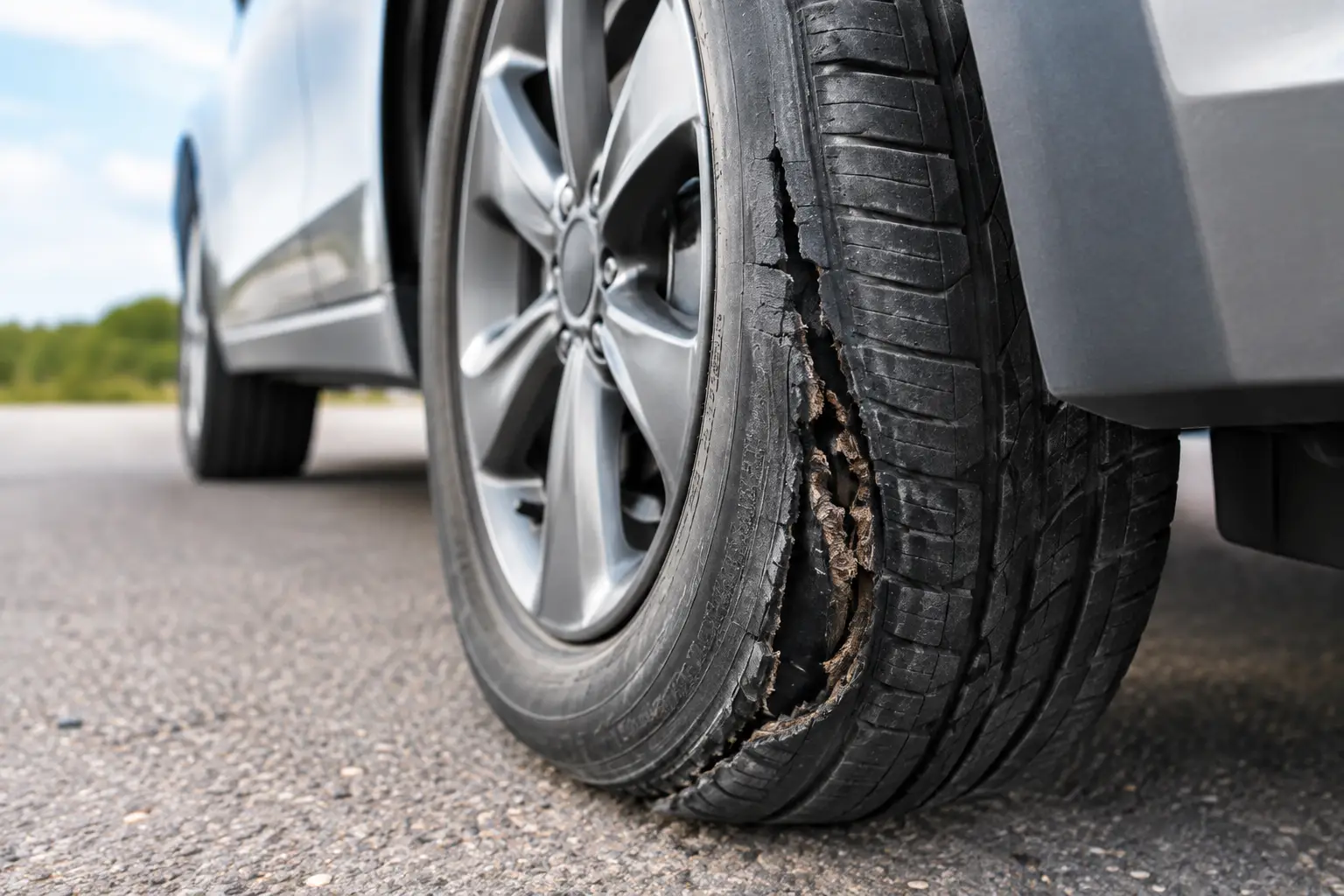
A steering wheel that suddenly shimmies at highway speed is not always an alignment issue. When the vibration feels new, grows stronger as you accelerate, or comes with a visible bulge in the tread, it may be one of the most serious tire problems a driver can face. Knowing the signs of tire separation can help you stop before a damaged tire becomes a blowout, a loss of control, or a dangerous roadside situation.
Tire separation means the internal layers of a tire are coming apart. Modern tires are built from bonded layers of rubber, steel belts, fabric, and other materials. When those layers lose their bond, the tire may look distorted, ride rough, and fail with little warning. This is not a condition to monitor for another week or drive on until your next scheduled service.
What Tire Separation Looks and Feels Like
Tire separation does not always announce itself with a flat tire. In many cases, the tire still holds air while its structure is failing. That is what makes the condition easy to overlook and especially risky at freeway speeds.
The most common symptom is a rhythmic vibration or thumping that becomes more noticeable as vehicle speed increases. Drivers often describe it as feeling like they are driving over a repeating series of small bumps, even on smooth pavement. Unlike a minor wheel-balance issue, the vibration may become aggressive quickly and can sometimes be felt through the seat, floor, or steering wheel.
A separated tire can also cause the vehicle to pull, wander, or feel unstable. The effect depends on which tire is damaged and how far the separation has progressed. A front tire problem may be more apparent in the steering wheel, while a rear tire issue can make the vehicle feel as though the back end is swaying or hopping.
A Bubble or Raised Area in the Tread
Inspect the tread surface closely if you suspect a problem. A raised hump, wave, or egg-shaped section around the tire’s circumference is a major warning sign. The tread may no longer sit evenly because the steel belt beneath it has shifted or detached.
This is different from normal tread wear. Normal wear develops gradually across the tire. Separation creates an obvious distortion, sometimes with a section of tread that looks lifted, uneven, or out of round. Do not confuse a tread bulge with a sidewall bubble, either. Both require tire replacement, but a sidewall bubble usually points to damaged internal cords from an impact, while tread distortion can indicate belt separation.
A Thumping Noise That Matches Wheel Speed
Listen for a repeating thump, slap, or roar that gets faster as the vehicle gains speed. It may be more noticeable with the windows down or when driving beside a wall or barrier that reflects sound back toward the vehicle.
Road noise alone does not confirm tire separation. Aggressive tread patterns, cupped wear, worn suspension parts, and wheel-bearing problems can create similar noises. Still, a new repetitive sound paired with vibration deserves a professional inspection before more driving.
Why Tire Separation Happens
Tire separation can result from one severe event or a combination of stress over time. Heat is a major factor. Underinflated tires flex excessively, which creates heat inside the casing and places extra strain on the bonds that hold the tire together. Long highway drives, heavy cargo, high ambient temperatures, and sustained speeds can make that heat problem worse.
Impact damage is another common cause. Denver roads can deliver potholes, broken pavement, construction zones, and curb strikes that damage a tire internally even when the outside looks mostly normal. A hard hit can bend a wheel, break cords, or start an internal separation that becomes visible later.
Age matters as well. Tires can lose structural integrity over time, particularly if they have been exposed to severe temperature swings, prolonged sunlight, or long periods of sitting. Low tread depth, uneven wear, repeated low-pressure driving, and prior repairs outside the repairable tread area can also reduce a tire’s margin of safety.
There is no single rule that says every vibration is tire separation. A wheel that has lost a balance weight may vibrate at speed but have no structural damage. The difference is that a balancing concern can often be corrected, while a separated tire cannot safely be repaired or rebalanced into service.
What to Do When You Notice Signs of Tire Separation
If you feel a severe or sudden vibration, reduce speed gradually and avoid sharp steering inputs. Do not slam on the brakes unless an immediate hazard requires it. Signal, move to a safe location, and inspect the tires from a distance away from traffic.
If you see a bulge, exposed cords, torn tread, or an uneven raised section, do not continue driving on that tire. A separated tire can shed its tread or fail completely without much additional warning. Even a short drive to a tire shop can be a poor trade-off if the tire is visibly deformed or the vibration is substantial.
A safe next step is to use a properly inflated spare if you have one and know it is roadworthy, or arrange professional mobile tire service. For a vehicle parked at home, an office, or a fleet location, on-site service can avoid the risk and inconvenience of driving on a questionable tire. Tires Xpress can inspect the tire, verify the source of the concern, and install a replacement tire with professional-grade mounting, balancing, and torque procedures where your vehicle is located.
Do Not Try to “Fix” a Separated Tire
Adding air will not restore the internal bond. Neither will rotating the tire to the rear, balancing it, or applying a sealant. Tire sealant is designed for certain small punctures, not internal structural damage. A tire with confirmed separation needs replacement.
If a technician finds separation on one tire, the remaining tires should also be checked for age, inflation, impact damage, and irregular wear. Whether you replace one tire, a pair, or a full set depends on your vehicle, tire condition, drivetrain, and tread-depth differences. All-wheel-drive vehicles may have stricter requirements because significant differences in tire circumference can stress drivetrain components.
How a Professional Inspection Confirms the Problem
A proper inspection starts with the basics: tire pressure, tread depth, visible damage, and wheel condition. The technician may spin the wheel and watch the tread for runout, which is a visible up-and-down or side-to-side movement. A separated belt often makes the tire appear out of round as it rotates.
The wheel and tire may need to be removed for a closer evaluation. This helps distinguish tire separation from a bent wheel, loose wheel hardware, suspension wear, or brake-related vibration. Accurate diagnosis matters because the symptoms can overlap, and replacing the wrong component wastes time and money.
Professional service also means checking the replacement setup. A new tire should be mounted correctly, balanced precisely, inflated to the vehicle manufacturer’s recommended pressure, and installed with lug nuts tightened to specification using a calibrated torque wrench. Those details protect tire life, ride quality, and safety after the immediate problem is solved.
Preventing Tire Separation Before It Starts
You cannot prevent every road hazard, but a few habits lower the risk. Check tire pressure monthly and before longer trips, using the pressure listed on the driver’s door-jamb placard rather than the maximum pressure molded into the tire sidewall. Inspect tires after pothole strikes or curb impacts, even if the vehicle seems to drive normally.
Regular rotation helps tires wear more evenly, while timely alignment service can prevent uneven tread patterns that hide developing problems. Avoid overloading the vehicle, and replace aging or damaged tires before they become an emergency. For fleet vehicles, scheduled inspections are especially valuable because a tire failure can interrupt deliveries, appointments, and an entire workday.
A tire should feel round, stable, and predictable on the road. If yours starts thumping, vibrating, or showing a raised tread section, treat that change as a reason to stop and have it checked. A fast, professional inspection at your driveway, workplace, or fleet lot can turn a serious warning sign into a straightforward repair plan before the road makes the decision for you.