
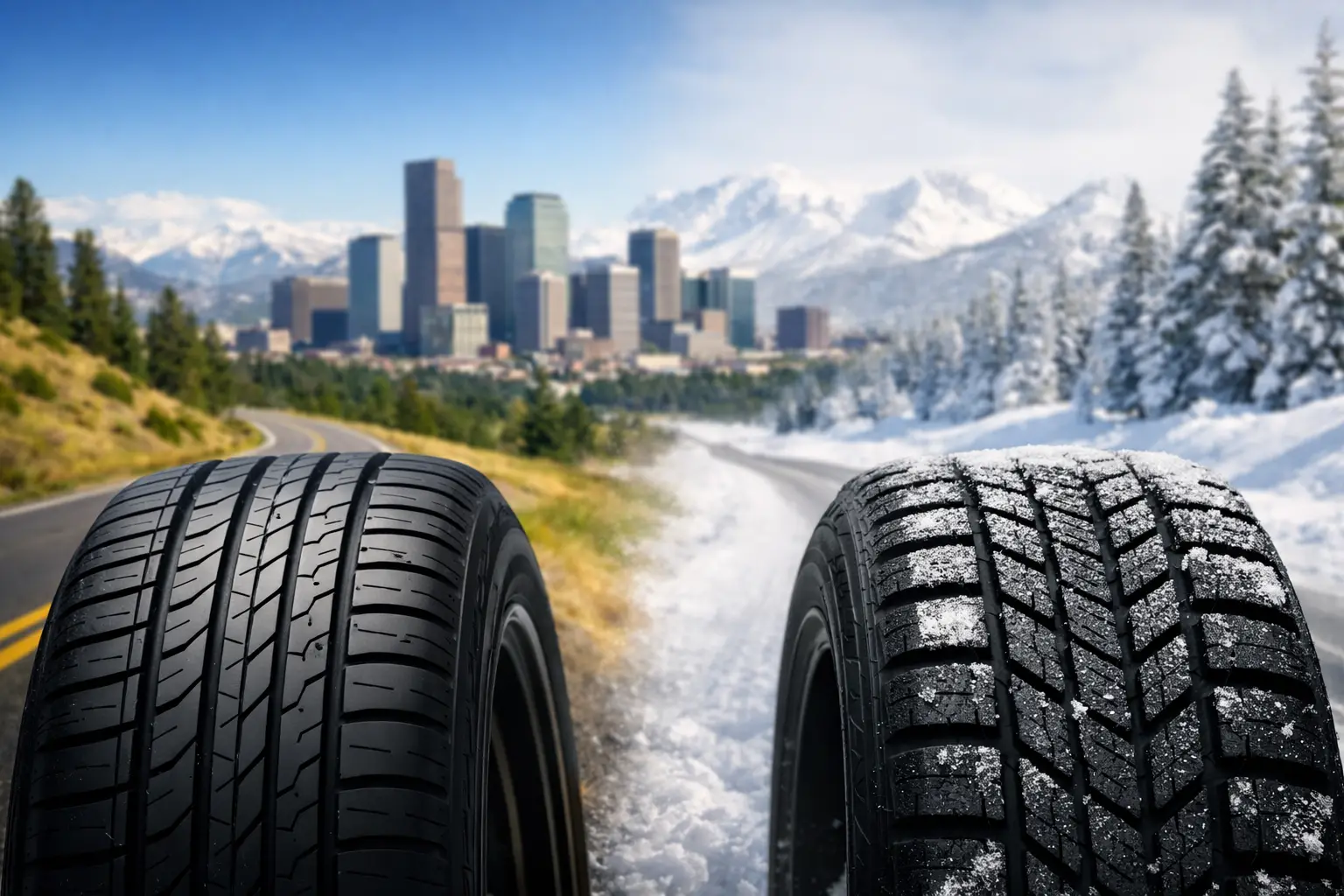
A clear morning drive from Denver can turn into packed snow, slush, and black ice before lunch. That is why the all season vs winter tires decision is less about a calendar date and more about where, when, and how you drive. The right tire setup affects your ability to start, turn, and stop when Colorado weather becomes unpredictable.
All Season vs Winter Tires: The Main Difference
All-season tires are built for versatility. They are designed to provide dependable everyday performance across dry roads, rain, and light winter conditions while delivering a quieter ride and longer tread life than a dedicated winter tire. For many Denver drivers who stay close to the city and drive mainly on plowed roads, a quality all-season tire can be a practical year-round choice.
Winter tires are designed around cold-weather traction. Their rubber compounds stay more flexible as temperatures drop, helping the tire conform to the road instead of becoming stiff and less responsive. They also use deeper tread patterns, more biting edges, and channels that move slush and water away from the contact patch.
That difference matters long before a road looks completely snow-covered. When pavement temperatures regularly fall below about 45 degrees, winter tires generally provide more confident braking and cornering than all-season tires, even on cold, dry pavement.
Why Tire Rubber Matters in Colorado Cold
Tread depth gets most of the attention, but rubber compound is a major reason winter tires perform differently. All-season compounds are intended to work through a broad temperature range. In deep cold, however, they can firm up. A firmer tire has a harder time maintaining grip on frozen pavement.
Winter tires use a softer, cold-weather compound that remains pliable. Combined with thousands of small tread cuts called sipes, this flexibility helps create traction on snow and ice. Those sipes open and close as the tire rolls, creating additional edges that grip slick surfaces.
No tire can eliminate the need for careful driving. Speed, following distance, braking technique, vehicle condition, and road conditions still matter. But winter tires give the driver more usable traction when conditions are working against them.
When All-Season Tires Make Sense
All-season tires are not automatically unsafe in winter. The right set can be a strong option for drivers whose winter travel is limited and whose routes are usually cleared quickly. They also make sense for people who want one set of tires, lower upfront cost, and solid performance through Denver’s dry summers and rainy spring days.
Choose a high-quality all-season tire when your driving is mostly local, you can postpone trips during major storms, and you rarely travel into the foothills or mountain corridors. Look beyond the name on the sidewall. Tread condition, inflation pressure, and tire age can make a meaningful difference in how any all-season tire performs.
Some all-season models carry the Three-Peak Mountain Snowflake symbol, often called 3PMSF. This rating indicates the tire has met a standardized snow-traction test. It can offer a useful step up from a conventional all-season tire, especially for drivers who encounter occasional snow but do not need the full cold-weather focus of a dedicated winter tire.
When Winter Tires Are the Better Call
Dedicated winter tires are the better choice for frequent snow, regular mountain travel, early-morning commuting, or any driver who cannot simply stay home when a storm moves through. They are especially valuable for routes that include steep grades, shaded streets, bridges, untreated parking lots, and long stretches of icy highway.
If skiing, mountain work sites, or winter road trips are part of your routine, winter tires provide a noticeable advantage. Colorado traction laws can also come into play on certain mountain corridors during active conditions. A tire marked with the Three-Peak Mountain Snowflake symbol may help meet applicable passenger-vehicle traction requirements, but drivers should always check current road conditions and requirements before traveling.
Winter tires should be installed as a complete set of four. Putting them only on the drive wheels may improve acceleration, but it can create an uneven grip balance between the front and rear of the vehicle. That imbalance can make the vehicle harder to control while braking or turning on snow.
Are Studded Winter Tires Necessary?
For most Denver-area drivers, studless winter tires are the best fit. Modern studless designs offer strong snow and ice performance without the additional road noise and pavement wear associated with studs. They are also more comfortable for the mix of dry, wet, and snowy roads common along the Front Range.
Studded tires can be useful in consistently icy conditions, but they are rarely necessary for typical city driving. Consider your actual routes rather than choosing the most aggressive option by default.
The Trade-Off: Winter Grip vs. Warm-Weather Wear
Winter tires are not meant to stay on year-round. Their softer compounds wear faster in warm weather, and their deep, flexible tread can feel less precise on hot dry pavement. They may also produce more road noise and reduce fuel efficiency slightly compared with an all-season tire.
That is why a seasonal tire setup works best when it is truly seasonal. Install winter tires when sustained cold arrives, then switch back to all-season or summer tires once spring temperatures are consistently warmer. This protects the winter tire investment and preserves the performance each tire was designed to deliver.
For drivers who keep separate tire sets, having winter tires mounted on dedicated wheels can simplify the seasonal change. It also reduces repeated mounting and dismounting on the same wheel. Whether you use a second wheel set or the same wheels, every seasonal installation should include a professional inspection, proper inflation, wheel balancing when needed, and torque applied to manufacturer specifications.
Do Not Let AWD Make the Decision for You
All-wheel drive helps a vehicle distribute power and can improve acceleration on loose or snowy surfaces. It does not create more grip when you need to brake or corner. Every vehicle, including AWD and four-wheel-drive models, relies on four small tire contact patches to stop and turn.
This is one of the most common winter-driving misconceptions. An AWD vehicle on worn all-season tires may pull away confidently from a stop, then still struggle to slow down on ice. A front-wheel-drive vehicle equipped with four quality winter tires can offer much more predictable winter control.
Before winter, check tread depth across the tire, not just in one spot. Uneven wear may point to alignment, suspension, or inflation issues that should be addressed. Also check tire pressure regularly as temperatures fall. Pressure typically drops with cold weather, and underinflation can reduce handling, increase wear, and affect fuel economy.
A Practical Choice for Denver Drivers
The best choice depends on your schedule as much as your vehicle. A remote worker who can wait out a snowstorm has different needs than a healthcare employee, delivery driver, parent with school drop-offs, or fleet operator with vehicles on the road every day.
If your winter driving is occasional and primarily on maintained Denver streets, a quality all-season tire with sufficient tread may be the sensible choice. If you drive in storms, travel I-70 regularly, work variable hours, or need dependable mobility regardless of the forecast, dedicated winter tires are worth serious consideration.
Tires Xpress can bring professional-grade tire installation and seasonal changeover service directly to a home, office, fleet yard, or parking lot. A technician can inspect tire condition, install and balance the appropriate set, service TPMS components when needed, and torque wheels correctly without requiring a day at a tire shop.
The forecast will keep changing, but your tire plan does not have to be complicated. Choose for the coldest, slickest conditions you realistically need to handle, keep your tires properly maintained, and give yourself extra time whenever the roads call for it.