A delivery van sidelined by a flat in the middle of a route is not just a tire problem. It can mean missed appointments, frustrated customers, overtime, dispatch changes, and a vehicle that is no longer producing revenue. Consistent commercial fleet tire maintenance gives fleet managers control over those disruptions by finding wear, pressure loss, and damage before they become a roadside event.
For Denver fleets, tire care also has to account for real operating conditions: sharp temperature changes, winter weather, construction debris, highway driving, stop-and-go routes, and heavily loaded vehicles. A practical maintenance plan keeps vehicles safer, extends usable tread life, and makes tire spending far more predictable.
Why Commercial Fleet Tire Maintenance Pays for Itself
Tires are one of the few vehicle components that affect safety, fuel use, handling, braking, and uptime at the same time. When they are neglected, the costs compound quickly. Underinflated tires build excess heat, wear along the shoulders, and increase rolling resistance. Overinflated tires can lose traction and wear prematurely through the center of the tread. Either condition can turn a manageable service item into an early replacement or a failure on the road.
A planned approach changes the conversation from reacting to flats to protecting vehicle availability. It also gives managers useful data. If one position on multiple vehicles repeatedly wears faster, that may point to alignment concerns, suspension wear, loading practices, route conditions, or inconsistent pressure checks. Replacing tires without identifying the cause only repeats the expense.
The right service interval depends on the fleet. A lightly used office fleet has different needs than cargo vans making daily deliveries, contractor trucks carrying equipment, or vehicles working around the clock. Mileage matters, but time, load, driver habits, and route severity matter too.
Build a Tire Inspection Routine Around Real Use
A fleet tire program works when inspections are frequent enough to catch small issues and simple enough that they actually happen. Drivers should complete a quick walk-around before operating the vehicle. This is not a substitute for professional inspection, but it can catch an obvious low tire, sidewall damage, embedded object, or dual-tire mismatch before the vehicle leaves the lot.
A technician should perform a more detailed inspection on a schedule tied to mileage and operating demands. This should include measured tread depth across the tire, cold inflation pressure, valve stem condition, visible damage, uneven wear patterns, wheel condition, and torque verification after tire or wheel service.
Check pressure when the tires are cold
Pressure is the foundation of tire performance, and visual checks are not enough. A tire can be significantly low without looking flat, especially on larger commercial vehicles. Measure pressure before the vehicle has been driven extensively, then compare it with the vehicle manufacturer or fleet-approved specification.
Do not use the maximum pressure molded onto the tire sidewall as the default target. That number describes the tire’s maximum capability, not necessarily the correct operating pressure for that vehicle and load. The correct setting may vary by axle load, tire size, and application.
Temperature swings make this especially relevant in Colorado. Pressure typically drops as temperatures fall, which means a fleet that looked fine during a warm afternoon may be running low after a cold overnight change. A quality portable air system and accurate gauge turn that risk into a quick correction.
Measure tread, do not guess
Tread depth should be measured at multiple points across each tire. The remaining depth matters, but so does the wear pattern. Center wear often suggests overinflation. Wear on both shoulders can indicate underinflation. Feathering, cupping, or one-sided wear can signal alignment, suspension, or balance issues.
Commercial vehicles should not wait for tires to reach the legal minimum before planning replacement. At that point, wet-weather traction and winter performance may already be compromised. Fleets that operate in snow, slush, or frequent rain often need a more conservative replacement threshold, particularly for steer tires and vehicles that carry passengers or valuable cargo.
Inspect damage with repairability in mind
A nail or screw does not automatically require a new tire, but not every puncture can be safely repaired. Location, angle, size, and internal damage determine whether a repair is appropriate. Damage in the tread area may be repairable after a proper internal inspection. Damage in the shoulder or sidewall generally requires replacement.
Temporary external plugs alone are not a professional fleet repair standard. A correct repair requires removing the tire, inspecting the interior, and using an approved combination repair when the tire is structurally sound. This protects the fleet from sending a compromised tire back into service simply because it is holding air for the moment.
Rotation, Balancing, Alignment, and Torque Work Together
Tire rotation is one of the most cost-effective ways to improve tread life, but it must follow the vehicle and tire manufacturer’s recommended pattern. Rotating at regular intervals helps distribute wear across the set, particularly on front-wheel-drive vehicles, cargo vans, and vehicles with frequent turning or uneven loading.
Balancing matters whenever tires are installed and whenever a driver reports vibration. An unbalanced assembly can create driver fatigue, accelerate irregular wear, and put unnecessary stress on suspension components. Professional-grade balancing equipment identifies where correction is needed so the tire rolls smoothly at highway speed.
Alignment should be checked when uneven wear appears, after impact damage from potholes or curbs, following suspension repairs, or when a vehicle pulls or the steering wheel sits off-center. Some fleets benefit from scheduled alignment checks, while others can rely on tire-wear trends and driver reports. The best approach depends on mileage, vehicle type, and the condition of the roads the fleet travels.
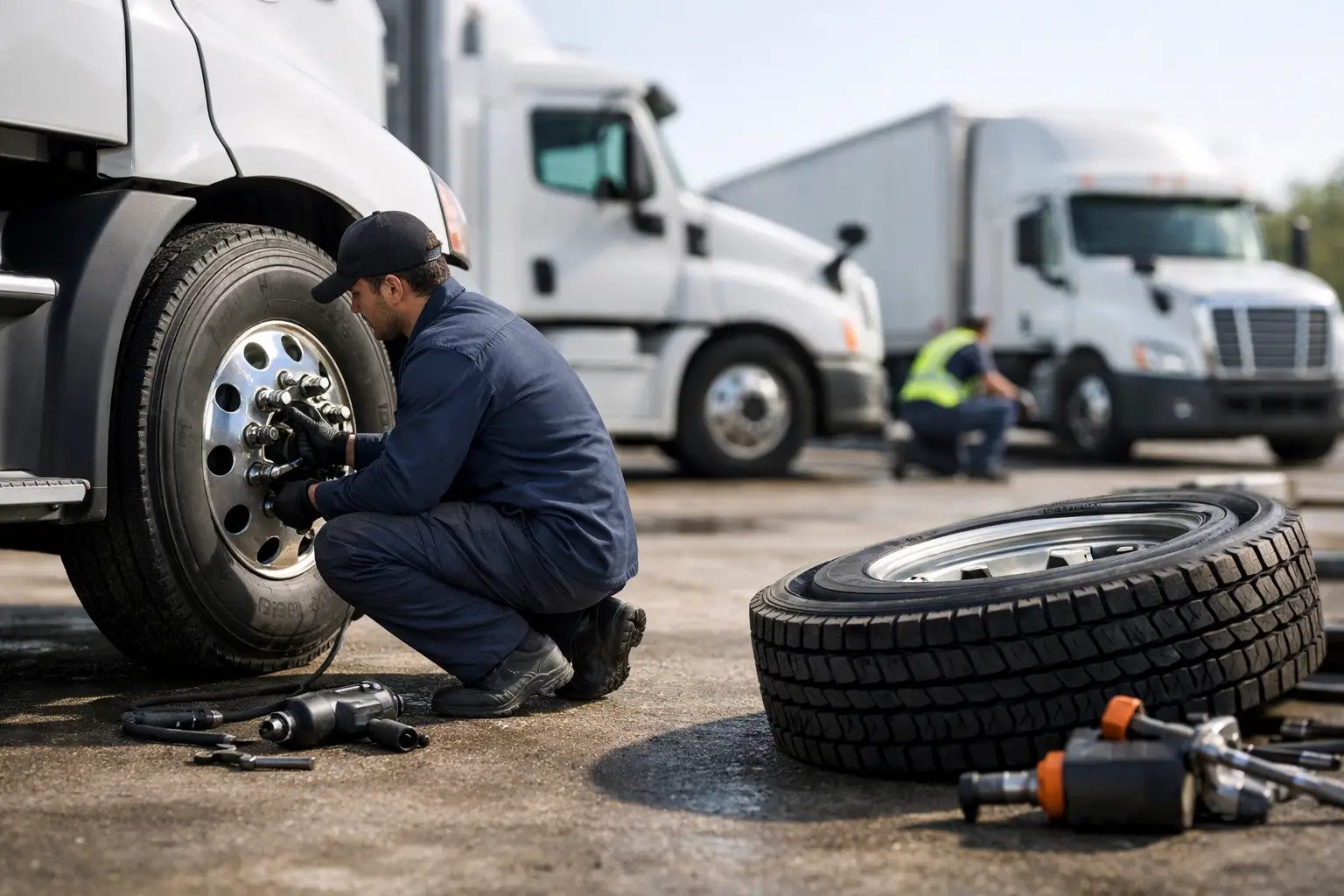
Wheel fastener torque is equally critical. Lug nuts that are too loose can create dangerous wheel movement. Overtightening can damage studs, wheels, and brake components. After wheel service, technicians should use a calibrated torque wrench and follow the vehicle’s specification. A professional mobile service rig should bring the same torque, lifting, mounting, inflation, and inspection capability expected in a well-equipped tire shop.
Make Drivers Part of the Prevention Plan
Drivers are the fleet’s earliest warning system. Give them a clear process for reporting low-pressure warnings, vibration, pulling, visible damage, or changes in handling. Reports should not be treated as inconveniences or postponed until the next oil change. A minor vibration can be an early balance issue, damaged belt, loose wheel weight, or tire defect.
The process should also clarify what drivers should not do. They should not continue operating on a visibly low tire, ignore a TPMS warning, attempt a sidewall repair, or overload a vehicle beyond its tire and axle ratings. For work trucks and vans, loading discipline is particularly important. Even a properly inflated tire can be overstressed when a vehicle consistently carries more weight than it was designed to handle.
Use Records to Replace Tires at the Right Time
A fleet maintenance record does not need to be complicated, but it should be consistent. Track tire brand and size, installation date, mileage, tread readings, repairs, rotations, pressure corrections, recurring issues, and removal reason. Over time, this information identifies which tires perform best for specific routes and loads.
Price should not be the only purchasing factor. A less expensive tire may be the right call for a lightly used local vehicle, while a higher-grade commercial tire may deliver better value on a high-mileage route. Consider tread life, traction needs, casing durability, ride quality, fuel efficiency, and availability. The best tire is the one that supports the vehicle’s actual work, not simply the one with the lowest invoice price.
Reduce Downtime With Mobile Fleet Service
A maintenance plan is only useful if the service can happen without pulling vehicles out of operation for half a day. Mobile fleet tire service allows inspections, rotations, seasonal tire changes, flat repairs, installations, balancing, and TPMS work to be completed at a fleet yard, workplace, or parking location.
That convenience is especially valuable when a vehicle has a slow leak or needs several tires replaced but is still needed for its next shift. Scheduling service around dispatch windows reduces disruption and helps managers avoid the choice between lost productivity and deferred maintenance. For urgent failures, responsive 24-hour fleet support can keep a single disabled vehicle from creating a much larger operational problem.
Tires Xpress brings professional tire-shop equipment directly to Denver-area fleet locations, helping teams address routine maintenance and urgent tire issues without adding unnecessary transportation or waiting time.
A fleet’s tire program does not have to be complicated to be effective. Start with accurate pressure checks, measured tread inspections, prompt repair decisions, and clear service records. Then make maintenance easy enough to complete before the next route turns a small issue into an expensive delay.