
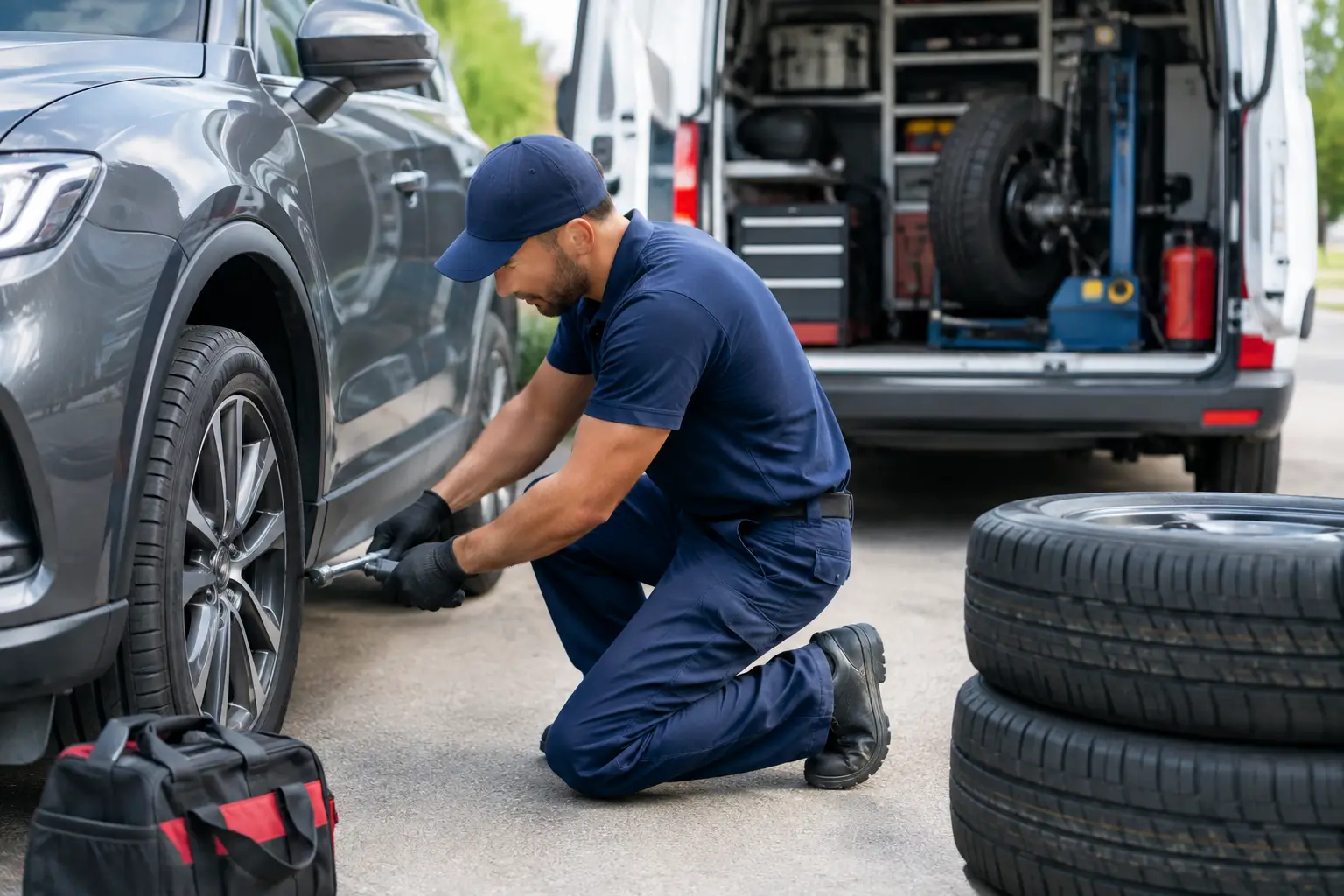
A flat tire in an office parking lot should not turn into a half-day away from work. A seasonal tire change should not require arranging a ride, sitting in a waiting room, and reshuffling your entire schedule. Mobile tires bring trained technicians, professional-grade equipment, and tire-shop-level service directly to the place your vehicle is already parked.
For Denver drivers, that convenience matters year-round. A clear morning can become a snow event by afternoon, summer heat can expose a weak tire, and a nail picked up on I-25 can leave you stranded at the least convenient moment. Mobile tire service is designed to solve those problems where they happen, without asking you to lose more time than the tire issue already cost.
What Mobile Tires Service Includes
Mobile tire service is more than someone arriving with a jack and a spare. A properly equipped mobile service rig can mount and balance new tires, repair eligible punctures, rotate tires, replace valve stems, install or service TPMS components, check tread depth, and inflate tires to the manufacturer-recommended pressure. The difference is location, not the standard of work.
For new tire installation, the technician brings the tires to your home, workplace, apartment parking area, or fleet yard. Each wheel is removed carefully, the replacement tire is mounted and balanced, and the wheel is reinstalled with a precision torque wrench. Proper torque is not a small detail. Over-tightened or unevenly tightened lug nuts can create future service problems and may damage wheel components.
Mobile service also works well for planned maintenance. Tire rotation helps tires wear more evenly, while a seasonal change lets drivers move between summer, all-season, and winter tire setups without spending part of a Saturday at a shop. When a technician comes to you, routine tire care becomes an appointment that fits around your day rather than an errand that takes it over.
When Mobile Tires Are the Right Choice
Mobile tire service is especially useful when your vehicle is safe to service where it sits. A driveway, office lot, garage, apartment parking area, and fleet facility are often ideal locations because they provide stable ground and room for the technician to work safely.
It is a strong option for busy professionals who cannot leave work, parents who cannot easily load everyone up for a shop visit, and commuters who discover a slow leak before a long drive. It also makes sense for drivers replacing worn tires before a road trip or preparing for changing Front Range weather.
For fleets, the benefit is even more direct. A work truck, delivery van, or service vehicle sitting idle does not just create inconvenience. It can interrupt routes, delay customers, and cost revenue. On-site tire repairs, replacements, and scheduled maintenance reduce the time vehicles spend out of service. Account-based 24-hour fleet support can be particularly valuable when a tire problem happens outside normal business hours.
There are situations where a shop may still be necessary. Major wheel damage, severe suspension issues, or a vehicle parked in an unsafe or inaccessible area may require towing or a different repair environment. A professional mobile technician will assess the condition honestly and explain the safest next step rather than attempting work that should not be performed on-site.
Flat Repair Depends on the Damage
Not every flat tire should be repaired. A puncture in the center portion of the tread may be repairable if the tire has sufficient remaining tread and has not been driven while severely underinflated. A nail or screw near the shoulder or sidewall is usually a different situation. Sidewall damage, visible cords, large cuts, and structural damage call for replacement, not a quick patch.
This is where professional inspection matters. A tire can appear repairable from the outside but show internal damage once it is removed and inspected. Quality service means checking the puncture location, tire condition, tread depth, bead area, valve stem, and wheel for problems that could affect safety or cause another air loss.
A slow leak is another issue that deserves attention. It may come from a small tread puncture, a leaking valve core, corrosion around the wheel bead, or a damaged TPMS valve stem. Adding air every few days may keep the vehicle moving temporarily, but it does not solve the cause. Mobile tire repair gives you a clear diagnosis at your location, along with a practical recommendation for repair or replacement.
Denver Weather Makes Tire Timing Important
Denver drivers deal with wide temperature swings, sudden snow, dry pavement, slush, and long highway commutes. That makes tire condition a safety issue, not simply a maintenance item. Cold weather lowers tire pressure, and a meaningful pressure drop can trigger a TPMS warning light or reduce traction and fuel efficiency.
Winter tires can provide a noticeable advantage when temperatures stay low and roads become slick. Their rubber compounds remain more flexible in cold conditions, and their tread patterns are designed to find grip in snow and slush. All-season tires may be the practical choice for many Denver drivers, particularly those who stay close to plowed city roads, but their performance varies significantly by model and tread depth.
The right setup depends on how and where you drive. A driver commuting within central Denver may have different needs than someone traveling regularly to mountain towns or working early shifts before roads are cleared. A mobile technician can help with the service side of that decision by installing the tires you choose, completing a seasonal swap, and checking the condition of the tires coming off your vehicle.
Professional Equipment Still Matters at Your Location
Convenience should never mean cutting corners. The most capable mobile tire providers operate with custom-built service rigs carrying the equipment needed to perform work correctly. That includes hydraulic lifting equipment, tire mounting and balancing machines, portable air compressors, tread-depth gauges, torque tools, tire repair equipment, and TPMS service tools.
Balancing is a good example of why the equipment matters. A newly mounted tire that is not balanced correctly can cause vibration at highway speeds, uneven wear, and an uncomfortable drive. The technician should balance the wheel before reinstalling it, then torque the lug nuts to the proper specification. These are the same essential standards you expect from a quality tire shop, delivered without the shop visit.
Communication matters too. Reliable mobile service should provide a clear appointment window, updates when the technician is en route, and a straightforward explanation of what was completed. If an inspection finds that a repair is not safe or a tire should be replaced soon, you deserve to know why and what your options are.
How to Prepare for a Mobile Tire Appointment
Preparation is simple, but it helps the visit go faster. Park on a reasonably level, firm surface when possible, and leave enough room for the technician to access all four sides of the vehicle. If the wheel lock key is stored in the glove box, center console, or trunk, make sure it is available before service begins.
If you are buying tires, confirm the vehicle year, make, model, and tire size. The size is printed on the sidewall and typically looks like a series of letters and numbers, such as 225/65R17. Sharing your driving needs also helps: highway commuting, mountain travel, towing, long fleet routes, or occasional city driving can all influence the right tire recommendation.
For a flat or TPMS warning, do not ignore obvious signs of damage. If the tire is visibly low, avoid driving on it unless necessary. Driving on a severely underinflated tire can damage the internal structure, turning a repairable puncture into a replacement. If you can safely park the vehicle and request on-site help, you may protect both the tire and the wheel.
A Better Way to Keep Vehicles Moving
The value of mobile tire service is not just that it is easier. It removes unnecessary downtime while keeping professional inspection, installation, balancing, and safety procedures in the process. Tires Xpress brings that capability to Denver driveways, workplaces, parking lots, and fleet locations, with same-day availability when scheduling allows.
Whether you are planning ahead for winter, dealing with a slow leak, or trying to keep a fleet on the road, choose service that respects both your time and your vehicle. A well-timed tire appointment can turn a disruption into one more task handled before your day gets away from you.