
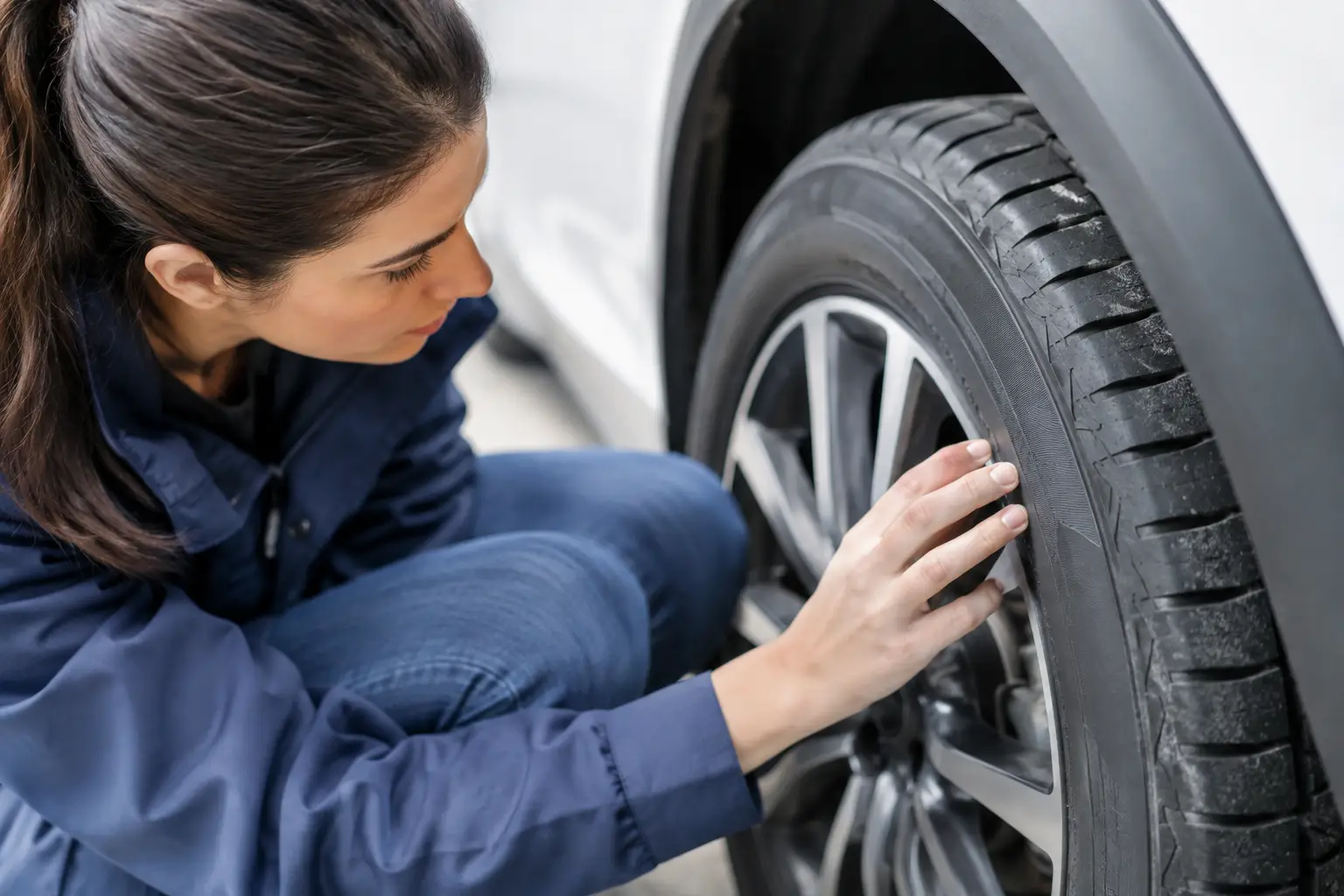
A sidewall problem can turn a normal commute, school pickup, or fleet route into an immediate safety decision. Knowing how to inspect tire sidewall damage helps you separate a minor surface mark from a tire that should not be driven another mile. The sidewall is not designed for the same kind of repair options as the tread, so visible damage deserves a careful look before you head back onto Denver roads.
Why Tire Sidewall Damage Deserves More Attention
The tire sidewall is the flexible area between the tread and the wheel rim. It carries the vehicle’s load while flexing thousands of times per mile, absorbs road impacts, and protects the tire’s internal cords. A cut, puncture, or weakened section can compromise that structure even when the tire still holds air.
That is why a sidewall issue is different from a simple nail in the center tread. Many tread punctures can be professionally evaluated for repair if they meet strict location and condition requirements. Sidewall punctures and structural damage generally cannot be safely repaired because the area flexes too much. A plug, patch, sealant, or temporary fix may hide the symptom without restoring the tire’s strength.
Colorado conditions can make small damage worse quickly. Potholes, curb contact, sharp debris, temperature swings, and underinflation all add stress. If you notice a change after hitting a pothole or scraping a curb, inspect the tire before the next drive rather than waiting for a warning light or a flat.
How to Inspect Tire Sidewall Damage at Home or Work
Park on level ground, set the parking brake, and make sure the vehicle is in park or in gear. If you recently drove, give the tires time to cool before touching them. Turn the front wheels outward when checking front tires, if it is safe to do so, for a better view of the inside-facing sidewall.
Start with a slow visual scan around the entire outer sidewall. Look from several angles in good light. A phone flashlight can help reveal cuts, splits, raised areas, and rubbing marks near the rim protector. Check the inner sidewall as well when you can safely access it, since damage there is easier to miss.
Run your hand lightly over suspicious spots only if there are no exposed cords, sharp objects, or loose rubber. You are feeling for a raised blister, a soft spot, or an area where the rubber shape changes. Do not press hard on a bulge. A tire with weakened internal cords may fail without much warning.
Check tire pressure with a reliable gauge and compare it with the pressure listed on the driver’s door-jamb placard. Do not use the number molded on the tire sidewall as your regular operating pressure. Low pressure can create sidewall flex and heat, while an abrupt pressure loss after an impact may point to a cut or rim-related leak.
Marks That Are Often Cosmetic
Light scuffs from brushing a curb are common, especially on low-profile tires. If the rubber is only discolored or lightly scraped, with no crack, missing material, exposed cord, bulge, or air loss, the tire may be usable. Still, take a photo and keep an eye on it. What looks minor from one angle can reveal a deeper cut when the tire is clean and well lit.
A shallow mark is not automatically harmless, and a deep mark is not always obvious. The deciding factor is whether the damage reaches or affects the tire’s reinforcing structure.
Signs You Should Stop Driving
Do not keep driving if you see a bubble or bulge in the sidewall. A bulge usually means internal cord damage, often caused by pothole or curb impact. The tire may look inflated and perform normally for a short time, but the compromised area can rupture under road load.
You should also stop driving and arrange service if you find exposed fabric, steel belts, or cords; a cut deep enough to show layers beneath the outer rubber; a sidewall puncture; cracking that is deep or widespread; a section of rubber separating from the tire; or a tire that has gone flat after an impact. A vibration, pulling sensation, thumping noise, or sudden TPMS warning after hitting debris also calls for an inspection.
If the damage is severe, do not attempt to drive slowly to a tire shop. Lower speed does not make a structurally damaged tire safe. Avoid adding sealant or using a temporary plug in the sidewall. If you have a safe, properly inflated spare and know how to install it, use it according to your vehicle instructions. Otherwise, mobile tire service can inspect the issue at your home, office, parking lot, or fleet location.
What Causes Sidewall Cuts and Bulges?
Most sidewall damage comes from a direct impact. A pothole strike can pinch the tire between the road edge and the wheel, breaking internal cords without leaving a dramatic external mark. A curb can slice rubber or crush the sidewall, particularly when parking at an angle. Road debris, construction materials, and damaged pavement can create similar problems.
Underinflation is another common contributor. When pressure is low, the sidewall flexes more than intended and generates damaging heat. Over time, that can weaken the tire internally. Overloading a vehicle, using tires with an insufficient load rating, or driving on a flat tire can also ruin a sidewall even if the outside initially appears intact.
Age and weather exposure matter, too. Small surface cracks may develop as rubber ages, especially on vehicles parked outdoors for long periods. Fine, shallow weather cracking does not always mean immediate failure, but deep cracks, cracking around a bulge, or cracking combined with pressure loss should be assessed promptly.
Can a Damaged Sidewall Be Repaired?
In most cases, no. Professional tire repair standards limit repairable punctures to specific areas of the tread, not the sidewall or shoulder. The reason is simple: the sidewall continually bends as the tire rolls. A repair installed there cannot reliably restore the original structure or survive that repeated flexing.
There are a few situations that require judgment. A superficial curb scrape may not require replacement. A tire with light aging cracks may need monitoring rather than immediate action, depending on depth, tire age, pressure retention, and overall condition. But a bulge, deep cut, puncture, exposed cords, or damage from running flat is a replacement situation, not a repair situation.
A trained technician can also check the wheel for bends, cracks, bead damage, and slow leaks. Replacing a tire without addressing a damaged wheel or an inflation issue can lead to another service call sooner than expected.
What to Expect From a Professional Inspection
A proper inspection goes beyond a quick glance. The technician checks the sidewall and tread, measures inflation, reviews the tire’s age and wear, looks for impact signs at the wheel, and evaluates whether the tire has been operated while underinflated. If replacement is needed, the technician should confirm the correct tire size, load index, speed rating, and fitment for your vehicle.
For all-wheel-drive vehicles, tread-depth differences between tires may influence whether one tire, a matched pair, or a full set is the right choice. The answer depends on the vehicle manufacturer’s guidance, the remaining tread depth, and the condition of the other tires. This is one reason a sidewall problem should be evaluated with the full vehicle in mind, not as an isolated flat.
Tires Xpress brings professional-grade mounting, balancing, torque, inflation, and inspection equipment to your location, reducing the disruption of a sidewall issue. That means you can get a clear recommendation and, when appropriate, replacement service without arranging a ride, waiting in a service bay, or leaving a vehicle stranded at work.
Preventing the Next Sidewall Problem
Check tire pressure monthly and before long trips, using the vehicle placard as your reference. Make curb approaches slowly and as straight as possible, and give potholes a wide berth when traffic conditions allow. If an impact cannot be avoided, listen for new noise, watch for a TPMS alert, and inspect the tire as soon as you are parked safely.
A sidewall may only be a few inches of rubber, but it supports every mile ahead. When its condition is uncertain, choosing a professional inspection at your location is the practical way to protect your schedule and your safety.