
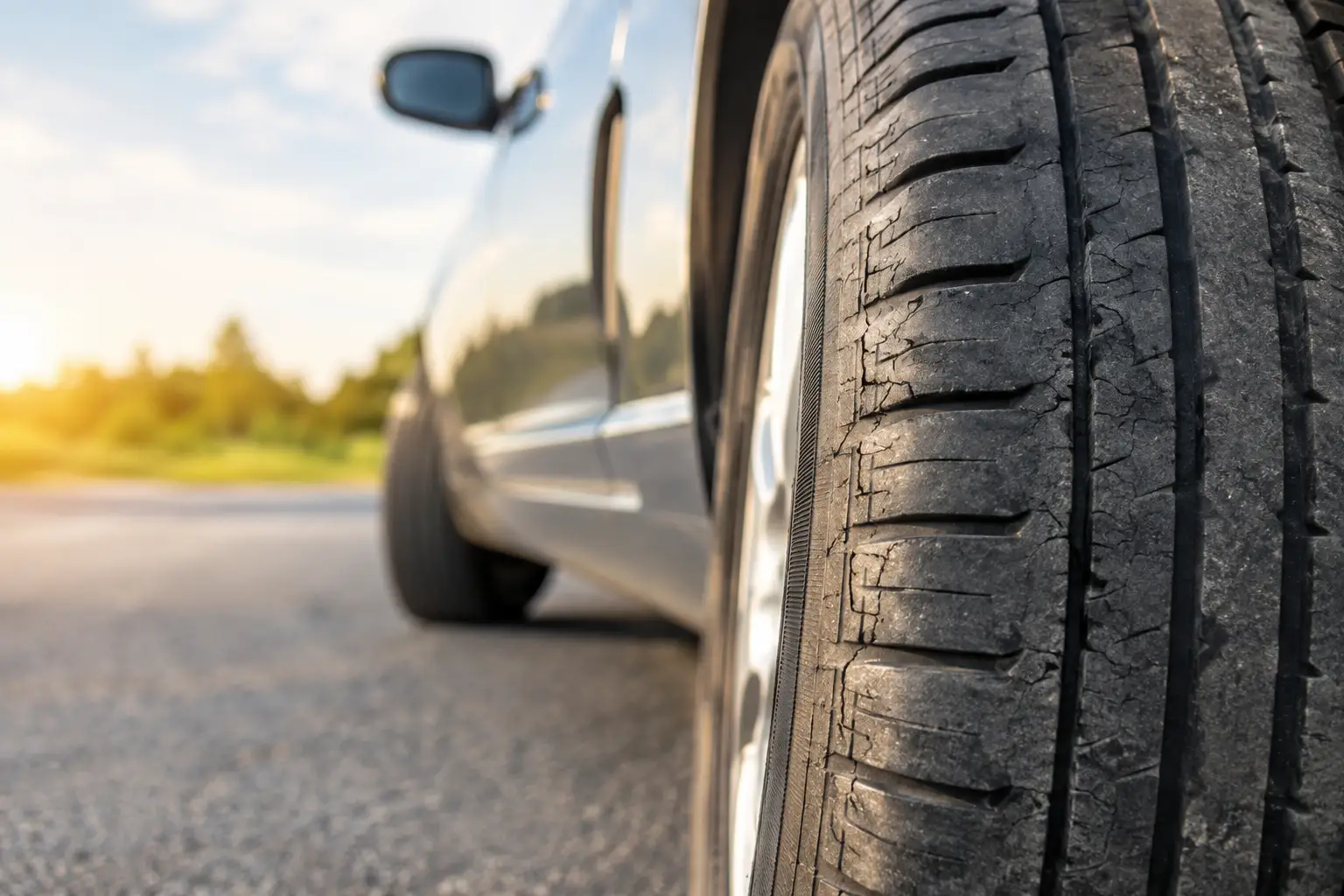
A tire can look perfectly usable from the curb and still be past its best years. Tire aging changes the rubber from the inside out, which means a vehicle with plenty of visible tread may not deliver the grip, flexibility, or durability its driver expects. For Denver drivers dealing with summer heat, winter cold, dry air, and sudden temperature swings, age deserves just as much attention as tread depth.
What Tire Aging Does to Your Tires
Tires are built from layers of rubber compounds, steel belts, fabric cords, and adhesives. Over time, oxygen, heat, sunlight, and normal use gradually change those materials. The rubber loses flexibility, and the bond between internal components can weaken. That process is normal, but it can eventually affect braking, handling, air retention, and the tire’s ability to withstand road impacts.
The risk is not limited to tires that have been driven hard. In fact, low-mileage tires can age out before they wear out. A vehicle that sits for long stretches, a weekend car, an RV, a trailer, or a spare tire may retain deep tread while the rubber quietly deteriorates. Tires need regular movement and correct inflation to perform as designed.
Colorado’s climate adds a few complications. High-altitude sun exposure can dry and stress rubber over time, while repeated cold and heat cycles cause tires to expand and contract. A tire parked outside every day faces more environmental exposure than one stored in a covered garage. That does not mean every outdoor-parked vehicle needs early replacement, but it makes routine inspection more valuable.
How to Tell How Old Your Tires Are
Every tire sold for road use has a date code molded into its sidewall. Look for the letters DOT followed by a series of numbers. The final four digits identify the week and year of manufacture. For example, a code ending in 2323 means the tire was made during the 23rd week of 2023.
The full DOT code is often located on only one side of the tire, so you may need to check the inner-facing sidewall. If the date is not visible from the outside, a professional inspection is the easiest way to confirm it. This is especially useful when buying a used vehicle, assessing a spare, or reviewing tires installed by a previous owner.
There is no single replacement age that applies to every tire in every situation. Tire manufacturers, vehicle makers, driving habits, storage conditions, and inspection findings all matter. Still, once tires approach six years of age, they deserve closer attention even when tread remains. Around 10 years from the manufacturing date, replacement is generally the prudent choice regardless of mileage or apparent condition. Follow the tire and vehicle manufacturer guidance when it is more specific.
Do not assume a recently purchased tire is newly manufactured, either. New, properly stored inventory can be safe and serviceable, but checking the date code gives you a clear picture of what you are installing. It is a small detail that supports smarter maintenance decisions.
Signs of Tire Aging You Should Not Ignore
Fine cracks in the sidewall or between tread blocks are the most familiar warning sign. Often called weather checking or dry rot, these cracks can indicate that the rubber is losing elasticity. Minor surface cracking does not automatically reveal the condition of every internal layer, but it is a reason to have the tire evaluated rather than ignored.
Other signs can be less obvious. Pay attention to a tire that needs frequent air top-offs, develops a vibration that balancing does not correct, shows a bulge, or has uneven tread wear despite proper alignment and inflation. A bulge, deep sidewall damage, exposed cords, or a separation concern calls for immediate attention. Those conditions are not a “drive it for another month” situation.
The spare tire is easy to overlook because it is out of sight. Yet it may be the oldest tire on the vehicle and the one you depend on during a roadside emergency. Check its date code, pressure, and overall condition at the same time you inspect the four tires on the ground. A compact temporary spare has separate speed and distance limitations, but it still ages.
Tread Depth Is Only Part of the Safety Decision
Tread depth tells you how much rubber remains for channeling water, snow, and slush away from the contact patch. It does not tell the whole story about tire condition. A tire can have 7/32 of an inch of tread remaining and still be a poor candidate for continued service if it is old, cracked, damaged, or internally compromised.
This matters during Denver winters, when reliable traction is not optional on a steep neighborhood street, an icy parking lot, or a fast-changing mountain corridor. An older tire’s rubber compound can harden, reducing its ability to conform to the road surface. Even all-season tires with adequate tread may not perform as confidently when their rubber has lost flexibility.
The practical decision is based on the complete picture: age, tread depth, sidewall condition, repair history, inflation habits, mileage, and how the vehicle is used. A lightly driven sedan stored in a garage may age differently from a work van that spends every day on hot pavement. A professional inspection can identify whether the right next step is monitoring, rotation, repair, or replacement.
How to Slow Tire Aging
You cannot stop time, but you can reduce the conditions that accelerate deterioration. Keeping tires inflated to the vehicle manufacturer’s recommended pressure is one of the most effective steps. Underinflation creates excess heat and flexing, while overinflation can reduce the contact patch and contribute to uneven wear. Check pressure when tires are cold, including the spare.
Regular driving helps, but routine maintenance matters more. Tire rotation promotes even wear, and alignment service prevents one area of the tread from being worked harder than the rest. If a vehicle will sit for weeks or months, avoid leaving it on flat or contaminated surfaces when possible, keep its tires properly inflated, and protect it from prolonged direct sunlight.
Avoid dressing products that leave tires excessively glossy or use harsh chemical formulas. Clean rubber with products intended for tire care, and rinse away road salt, brake dust, and other grime when practical. Most importantly, do not try to cover up cracks with tire shine. Cosmetic appearance is not a safety repair.
When It Is Time for a Professional Tire Inspection
Schedule an inspection if your tires are nearing six years old, you notice cracking, your vehicle has been sitting, or you are unsure about the date code. It also makes sense before a long road trip, seasonal tire change, or heavy-use period for a work vehicle. Fleet managers should build tire age checks into regular maintenance planning, particularly for trailers, backup vehicles, and equipment that accumulates low mileage.
A qualified mobile technician can inspect tread depth, sidewalls, valve stems, tire pressure, visible damage, and wear patterns right where the vehicle is parked. If replacement is the safer call, on-site mounting, balancing, TPMS service, and precision torque procedures can get the vehicle ready without losing hours to a waiting room or service-bay schedule.
Tires Xpress brings that professional-grade inspection and installation capability to driveways, offices, fleet lots, and parking areas across Denver. You get a clear assessment of what is on the vehicle and a practical path forward, whether the tires need attention today or simply closer monitoring.
If your tires are old enough that you have to guess whether they are still safe, it is a good time to stop guessing. A quick date-code check and professional inspection can protect your schedule now and help prevent a more disruptive tire problem later.